

I first met Angie Jefferson in prison in 1992.
In 2024, there she was with two other friends, standing on my doorstep in Tewksbury.
Angie had come to my college acting class at Framingham MCI via Bertie, a Jamaican beauty shunned by others because she killed her daughter. Hurting a child is anathema to women behind bars; and while we know now it was likely post-partum depression, Bertie was deemed irredeemable. She sought refuge with nurturing women who didn’t judge, women like Angie.
Angie, convicted of killing her abusive boyfriend and sentenced to first-degree murder, was in her early twenties and had just begun serving a life without parole (LWOP) sentence in 1992. She never minimized the homicide, but had spent years struggling with domestic abuse and childhood trauma. In spite of being locked up, she was determined to be there for her three young children and her siblings whom she raised before she went to prison.
Bertie had been in both previous plays I’d directed and told Angie she could transcend her sorrows with Rapshrew, our rap version of Shakespeare’s famed Taming of the Shrew. Plus getting to be someone else, even for a night, was an added bonus, said one of my students who had HIV.
I taught in prison for 10 years. However, it was my work; it was just what I did. It was not until 2024 that I’d learned that with my initial production in 1988 of The Merchant of Venice, I’d been the first person in the world to direct a Shakespeare play behind bars.
The person I called to tell that to was Angie. We screamed together on the phone. Student/teacher roles evaporated.
Angie threw her arms around me in Tewksbury much as she’d swaggered into class, as confident as anyone inside or outside prison. She was 55, and she’d been on parole since 2022, her LWOP sentence having been reduced to life with parole eligibility.
It hadn’t been easy: she’d fought for and won a second trial to earn that sentence, and waited for 30 years with her family who also lived in suspension. She was sent first to a halfway house, but now had an apartment of her own, a job, and a support network that spread across the state from family to strangers who’d heard Angie tell her story on the radio or read about it through BINJ.
Here we were: Angie, a survivor of 30 years in prison, and me, a cancer survivor, most recently on six months of chemo pills that produced painful cuts on my hands and feet. I was still Angie’s professor but I was also Angie’s peer. I realized that while I had never done time and Angie had not been gravely ill, we understood each other: suffering through prison is its own kind of cancer.
“I have a surprise,” I said, after we ate cheesecake. “For Angie.”
They followed me downstairs to the den and our big screen TV. I had argued with my husband about getting the 55” screen. It seemed excessive, but now I was grateful.
The three of them cuddled on my couch, oohing at the picture’s clarity, ahhing at the crisp sound. They had no idea what was coming.
I clicked a few buttons on my remote and suddenly there we were in Framingham, the pasty green curtain above the stage with actors’ names scrawled in silver glitter. Music blasted. LA, 1992. We were ready to see the story of Kate and Truck-T, Shakespeare’s Petruchio, and to instruct Kate on how to manage their contentious relationship.
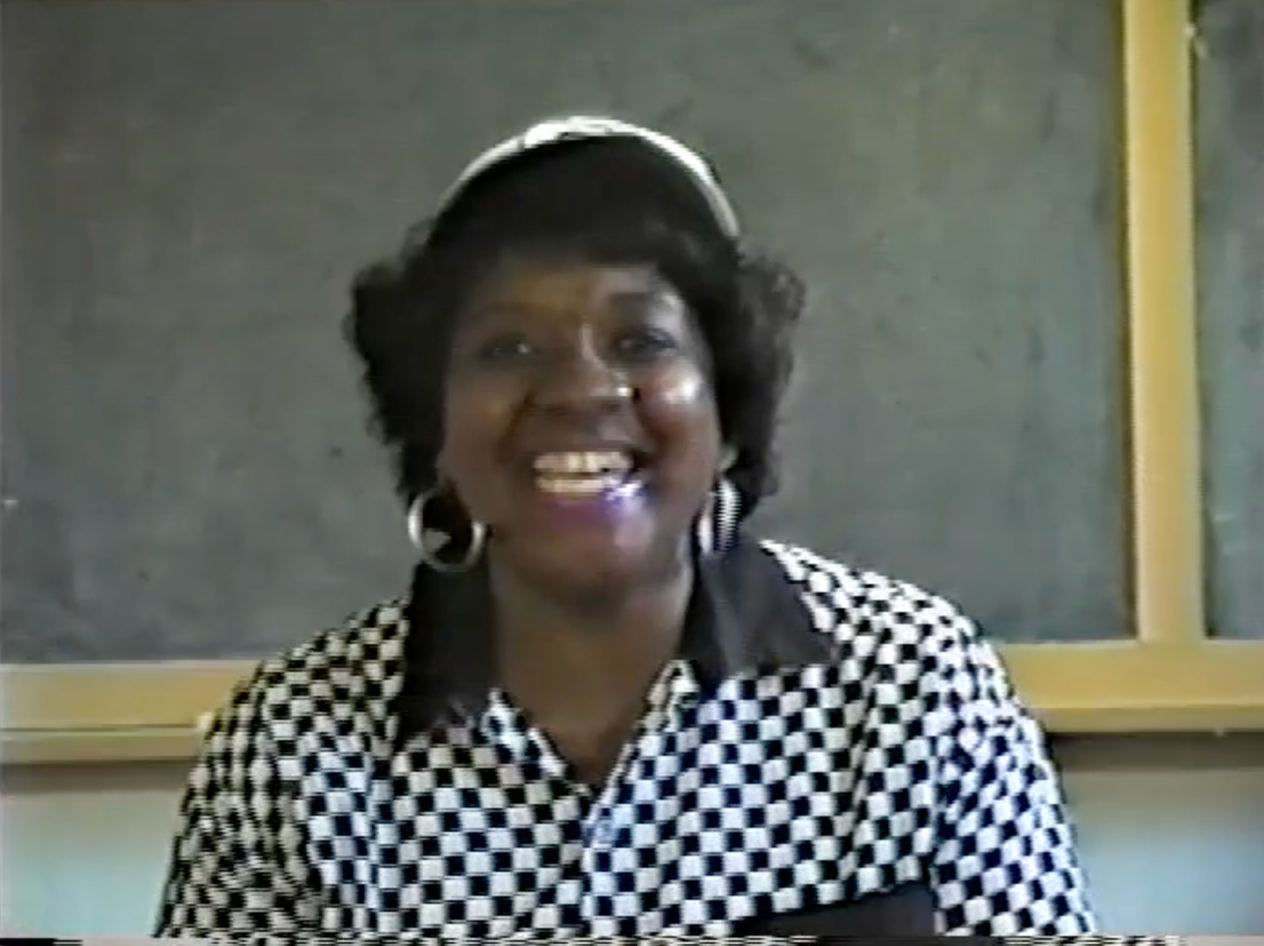
Prisoner Angie appeared, rapping with six other women, dancing across the stage, the Shrews, our all girl-rap group guiding Kate.
Angie fell over on her friends. Everyone was laughing, poking each other, glued to the screen.
Have you heard the latest news about Kate and Truck T? Well, I heard they’re getting married, that’s one to see.
Angie howled.
They giggled, gave high-fives for the dance, the music, the script, and the joy of seeing young Angie.
“I can’t believe that’s me,” Angie kept saying over and over.
The cast had been allowed to invite their family and friends to this performance and in the front row sat Angie’s mother and grandmother. At our talkback, the audience asked questions and the cast answered. The 22-year-old delighted in telling her family, “I finally did something and accomplished what I set my mind to.”
Then the magic. Somehow, without a guard interfering, the Shrews gathered downstage, and singing a cappella, improvised a church song for their families. The chorus filled the prison gymnasium: I remember mama in a happy way.
As we watched this in my home, we all wept. Angie’s mother had passed away years earlier.
By the time we said goodbye, we had regained our smiles.
I keep the rose my friends gave me in a silver bowl on a bookshelf filled with books from my family. The rose reminds me of Angie—her beauty, honesty, and fragility.
There are no thorns on this rose, yet both Angie and I know that we each are forged with thorns. Our friendship would not thrive without them.