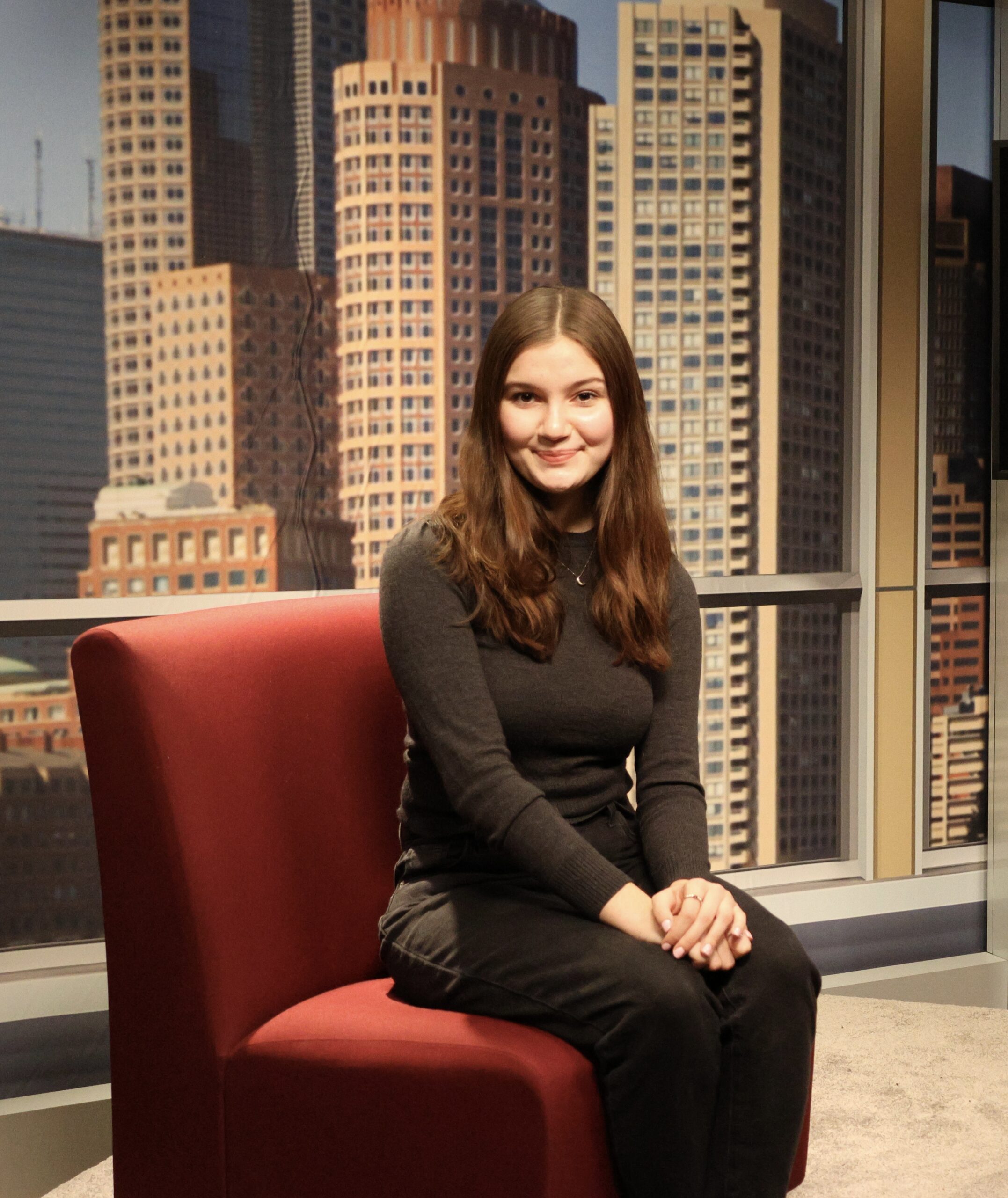
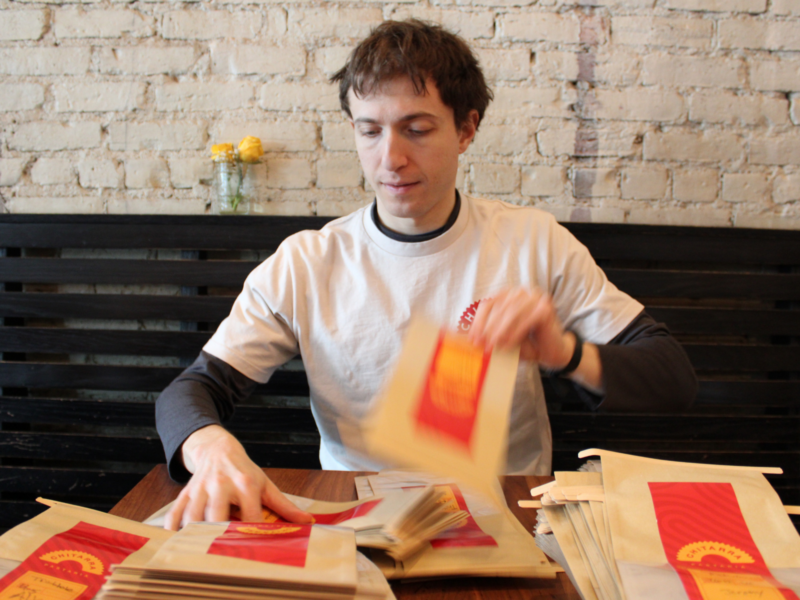
Julia Agostino places three bags of pasta into a bright yellow box marked with the tagline “Made with love … and ’tism.” There’s ruffled cresti di gallo noodles, deep-grooved radiatori, and spiral trottole.
The pasta bags, all of which include a handwritten label with the name of the employee who made the batch, are for Chitarra Pastaria’s “launch boxes,” an introductory package for the company’s handmade provisions.
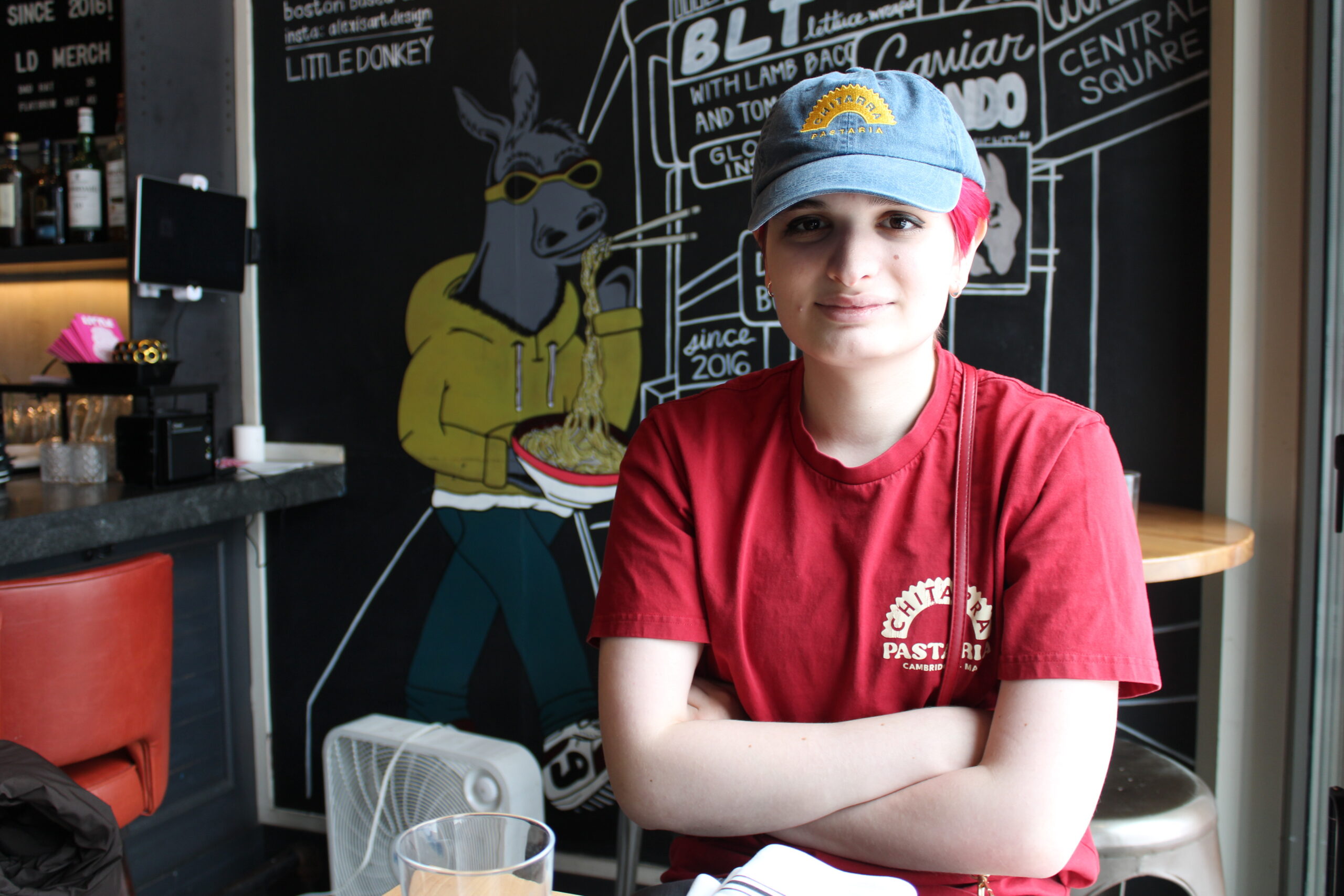
Agostino, 20, and her four coworkers at Chitarra all have high-functioning autism and benefit from frequent breaks, a quiet environment, and constant check-ins from supervisors—all things built into the workplace exclusively for adults with autism. Chitarra supervisors also accommodate each employee’s needs, such as adding velcro to Agostino’s apron to secure it due to fine motor challenges.
Agostino loves her job because she “get[s] to see diversity on display.” “I feel like I’m in an environment where I’m respected and my differences are understood,” she said in an interview.
The typical workplace can be overstimulating or socially isolating for adults with autism. Despite these challenges, Agostino found a job with the pasta maker in October 2024 through the MGH Aspire Works Internship Program, which introduces neurodivergent adults to the workforce. She has a lot of pride in the position; Agostino’s hair, dyed bright red, matches the brand’s color and last year’s holiday box which featured the slogan “‘Tism the season,” a phrase she came up with.
The hurdles can seem insurmountable. Adults with autism are often already paid less than neurotypical employees. Lately, there’s an added problem for this population in securing work in the first place due to many employers using AI to read job applications. Furthermore, recent federal budget proposals and executive orders under the Trump administration targeting disability service funding have introduced new uncertainties for state programs.
But even with the added pressure on the lowest paid sector of America’s workforce, those who provide these services endure against the budgetary odds.

Job coaching and acclimation
David Long and Dan Tatar founded their pastaria in June 2024 after experiencing the benefit of working with adults on the spectrum at their corporate jobs and wanting to create a space specifically for them. Chitarra operates in the Central Square restaurant Little Donkey, which is owned by a third Chitarra co-founding partner, Chef Ken Oringer.
Estimates vary widely, but out of an estimated 1 in 45 adults who are on the autism spectrum in this country, 40% to 85% are unemployed, according to various studies.
In 2024, the state’s Department of Developmental Services, which “provides supports for individuals with intellectual and developmental disabilities including Autism Spectrum Disorder,” referred more than 6,000 individuals to programs that provide job coaching to adults on the autism spectrum. But most of the 130,000 adults with autism spectrum disorder in Massachusetts are left to tackle the job market on their own.
Despite the services DDS and other organizations provide, there are still numerous obstacles to securing and maintaining employment, including transportation and receiving adequate pay.
The MGH Aspire program requires private funding, but DDS can refer individuals to programs that are covered by state funding or insurance, such as Bridgewell and the Charles River Center. Bridgewell is a community housing and day service organization based in Peabody and Billerica for neurodivergent people over 14 years old. The Charles River Center supports independence in adults over 22 with developmental disabilities in the MetroWest.
Both Bridgewell and Charles River offer group employment opportunities where a staff member assists several individuals in completing a task, such as stuffing envelopes at Needham Town Hall. For adults interested in individual, or non-group employment opportunities, a coach supports them through the entire job application process—resume writing, filling out the application, and interview practice.
Job coaching focuses on “acclimating to the [work] environment,” said Darren Goad, director of employment and community-based day services at Bridgewell. Overall, programs “move at the pace of the individual,” with coaches staying on during on-site training and work shifts until the trainee feels ready to work on their own, whether it takes days or weeks.
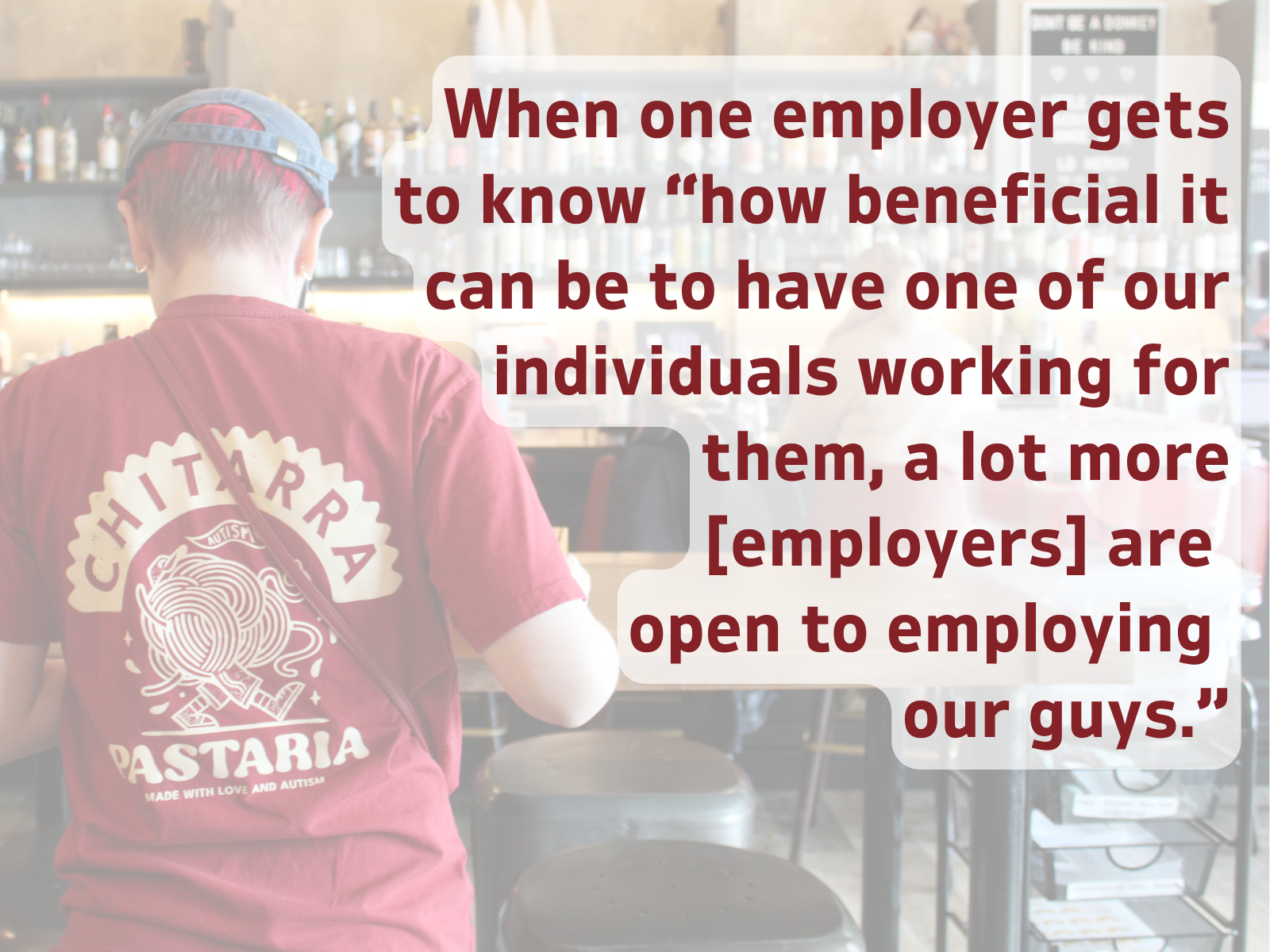
Opportunities range from various available hands-on jobs to roles at one of the organization’s partners—companies familiar with the coaching process—including positions at college dining halls, retail stores, and law firms. Jason Stockwell, the director of day services at the Charles River Center, said that when one employer gets to know “how beneficial it can be to have one of our individuals working for them, a lot more [employers] are open to employing our guys.”
Those benefits are realized over the course of years, and come from deliberate planning.
The support needed
Even though employers may want to hire neurodivergent employees, that goal can be unrealistic.
“Individuals on the spectrum are [less] likely” to “maintain working … without everybody around them understanding what they need to be successful,” said Tracey Stoll, who is board certified in special education and is an Advanced Certified Autism Specialist.
The ACAS professional added that employers need to support the heightened anxiety that adults with autism experience in new environments. Also on her radar: situations where people may say or do things that are considered awkward or disrespectful, but in which they are really trying to communicate a misunderstanding.
Although Bridgewell and Charles River Center coaches train neurotypical employees on how to work with a neurodivergent individual, “there’s not enough funding towards educating companies and [employees] from the top down … to understand how to work with an individual that has autism in [the work] environment,” Stoll said.
Myles Mazzotta, 26, has been a Chitarra employee since the company’s founding. He said the solution shouldn’t be training other employees on how to work with neurodivergent people, but rather in teaching people to be kind and understanding to everyone from a young age. Those values, he said, would have alleviated the need to mask his “quirky” personality to be better understood at a previous job.
A work-pay discrepancy
In October 2024, Massachusetts state law was changed to require employers to pay individuals with disabilities in DDS-funded employment programs at least minimum wage, which is $15.
The change did not impact Bridgewell, because their business partners were already willing to pay a full wage. Due to the expenses tied to hiring neurodivergent adults, though, there has been a major impact on the larger community.
The 1938 Fair Labor Standards Act established the ability to pay employees with disabilities below federal minimum wage, which is $7.25. As of May 2024, the Department of Labor reported that 90.96% of the more than 40,000 Americans paid subminimum wage have intellectual or developmental disabilities, such as autism. Forty-nine percent were paid $3.50 or less and about 10% were paid $1 or less per hour.

In Mass, employers not working with a DDS program can still apply for a waiver through federal and state labor departments to pay employees with disabilities below minimum wage. All factors considered, the Charles River Center sometimes struggles to find places willing to hire their people. Stockwell said that to get the work done of one or two neurotypical employees, employers need to pay three or four employees with autism minimum wage.
To compensate for the work-pay discrepancy, Stockwell recommends the state provide funding to employers who hire neurodivergent adults who cannot complete 100% of their role requirements. Goad, however, said individuals should only be matched to jobs they are equipped for, eliminating any work-pay discrepancy.
The additional AI obstacle
Agostino said she was given the space needed to thrive at Chitarra. After graduating high school in 2024, she attended community college for a week, but dropped out because of lingering burnout and was introduced to the MGH Aspire program from her DDS caseworker.
Agostino’s job coach at Aspire practiced interview questions with her and even attended her interview at Chitarra to help her feel more at ease. Finding a job through Aspire “was much easier than … going through the job market” online, she said.
Online job application questions can be worded in a “confusing” way, and individuals “may not know what the question is really looking for.” Stockwell said that in some situations, an individual may struggle to read or comprehend a question, particularly if it asks about hypothetical problem-solving scenarios.
Many applications, however, are automatically ruled out by AI, because individuals tend to write in their own words without including keywords from the job description. To avoid an automated rejection, the Charles River Center often asks employers for paper applications or alerts them that one of their individuals applied online.
Like Agostino, Ezra Kukis, 20, began working at Chitarra through the MGH Aspire program in October 2024. She struggles with “comprehending and digesting information,” and the slower-pace of Chitarra grants her the opportunity to fully understand or ask for instructions again before starting a task.
“I feel a lot more understood [here] than say in other places I would be,” said Kukis, who also manages the company’s inventory program. “We rely on each other to just get the work done. I enjoy coming here because it feels less like work and more like having fun some of the time.”
Agostino and Kukis have become friends beyond Chitarra, leading Agostino to invite Kukis to celebrate Agostino’s 20th birthday party in February.
“I’ve never been to a birthday party before,” Kukis said. “This is really awesome.”
Getting to work
To maintain employment, individuals need to have reliable and affordable access to wheels.
“Transportation is perhaps more of a hindrance than employment opportunities,” said Goad, the director of employment at Bridgewell.
Stoll said, “So many of our individuals are house-bound or unable to seek employment because they have no way of getting there and getting home.”
For these reasons, Bridgewell and the Charles River Center provide vans to take clients to their group employment opportunities. The latter also provides transportation for some members with individual jobs, but most take the Ride, an MBTA service which provides door-to-door transit for people with a temporary or permanent disability.
While Chitarra’s employees are comfortable with public transit, other adults with autism may struggle on the T because of its changing schedule and loud noises, which exacerbate sensory issues and the need for a set routine, Stoll said.
The ACAS professional is currently talking to One Well Health Care, which provides in-home health services in nine states, to advocate for the expansion of their “safe” and “reliable” rides program with Uber Health to Massachusetts. Currently only available in Pennsylvania and Connecticut, the rides are funded through Medicaid or other health insurers for rides to medical appointments, work shifts, and social events.
Despite the numerous services Massachusetts provides, adding programs like One Well Health Care and expanding existing services is necessary to reach more adults with autism.
“With the right resources from birth through adulthood, [individuals with disabilities] become competent and the best version of themselves,” Stoll said.