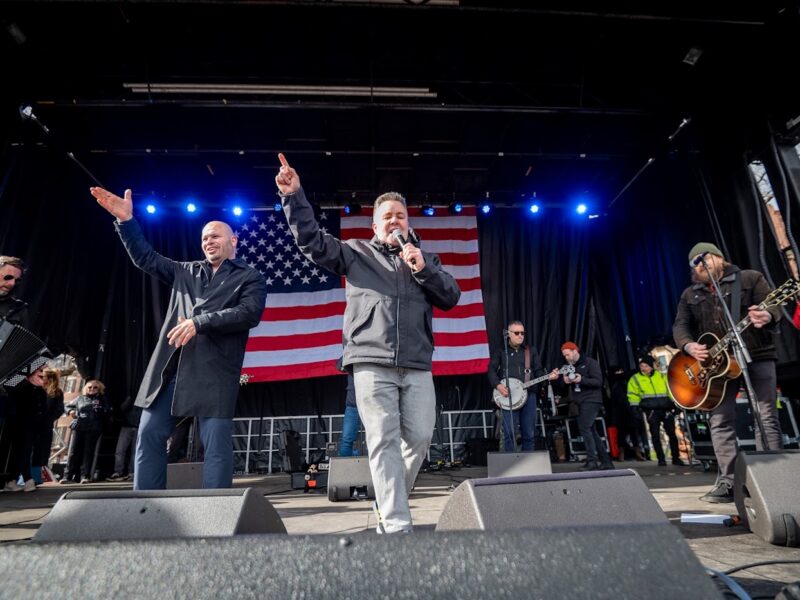
Last month, more than eight million people gathered across all 50 states for the third No Kings protest, a movement that began in June of 2025 to oppose President Trump’s executive overreach and assert that America does not tolerate dictatorships. In Massachusetts alone, there were more than 160 actions, one of which was a demonstration in Boston Common drawing about 180,000 attendees.
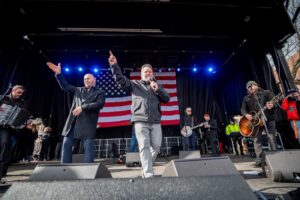
Reminiscent of popular protest music of the 20th century anti-war movement, this demonstration featured performances from the Boston Area Brigade of Activist Musicians, BVOCAL, Good Trouble, and Boston punk rock icons Dropkick Murphys. Like Bob Dylan, Joni Mitchell, and artists of the 1960s who used music as a form of protest, these artists volunteered their time to express their frustration with the current administration, adding joy and volume to the movement with their music.
“We’re happy to take part in anything that offers resistance to the horrible things that are happening in America today,” Ken Casey, primary songwriter, lead singer and bassist for the Dropkick Murphys, said.
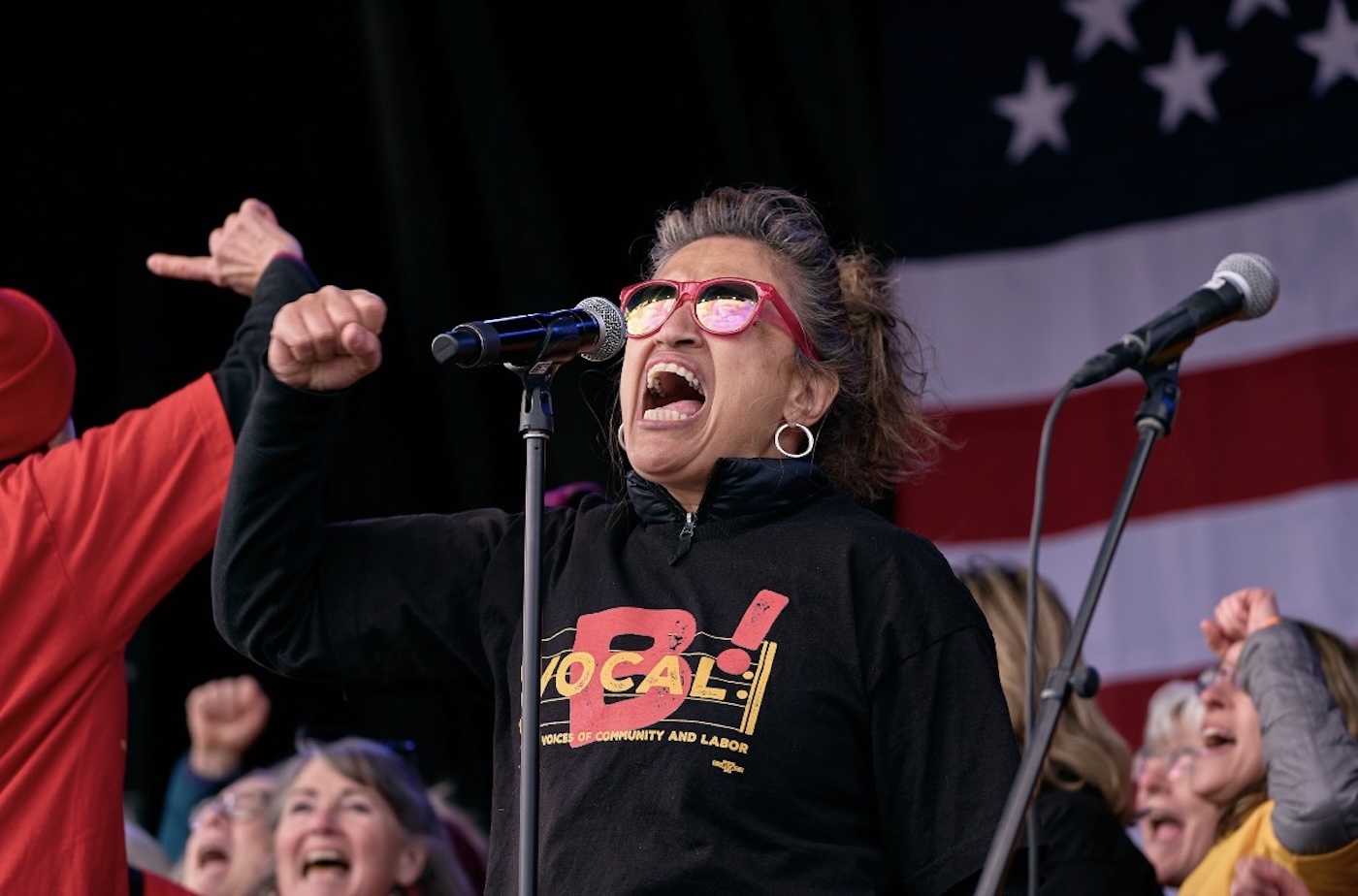
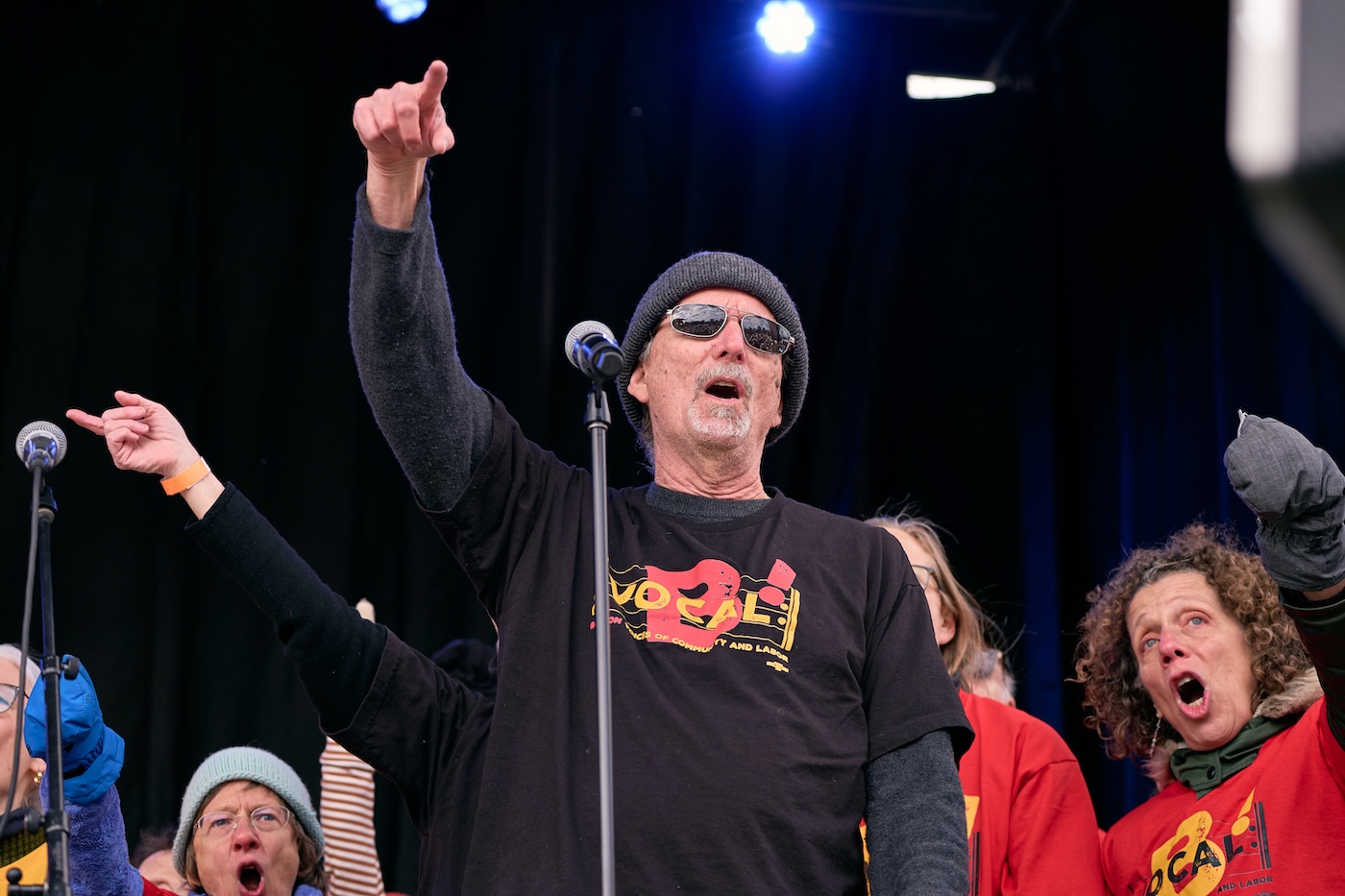
BVOCAL, which was founded last year after Trump’s election to a second term, performed two songs at the protest. The first, “Hostile Government Takeover,” focuses on the war in Iran and other issues in its lyrics: “President Trump, no more war / Mass destruction, what’s it for?” They also played a cover of the Twisted Sister song “We’re Not Gonna Take It,” with lyrics asking Citizens Bank to stop financing ICE detention centers.
Lisa Gallatin, the music director of BVOCAL, stressed the importance of incorporating music into the resistance because of its ability to unite people and provide protesters with the energy to keep showing up.
“It’s a way of feeling connected. It’s a way of feeling unified. It’s a way of feeling the power of what happens when we raise our voices together,” Gallatin said. “In addition, it’s a way to sustain us through what is going to be a very long three years, and perhaps longer as we fight the rise of authoritarianism in our country.”
She added that while chanting and camping out can deter people who are not already involved in the movement, music is more inviting and has the power to invite new people in.
“Singing opens a door, opens hearts and minds, and hopefully helps us to grow this mass movement that we need to be building,” Gallatin said.
On a slightly louder note, Dropkick Murphys performed with the intent of bringing “a little less kumbaya and a little more we’re sick of this bullshit to the protest, as Casey explained. The Boston punk band was invited to perform at this No Kings last April, after working with Mass 50501, a nonpartisan nonviolent protest organization, at its Hands Off! Boston event in April 2025. For this one, they even debuted a new song, “Don’t Call Us a Fucking Terrorist,” in honor of those who died in Minneapolis while excersing their constitutional right to free speech. Frequently asking the crowd, “Who’s sick of this shit?” the Dropkicks used their voices to highlight the anger of the people.
The Good Trouble Brass Band also performed, as a part of BABAM, a fluid group of musicians made up of many Boston bands and musical activists. Reebee Garofalo, who plays snare drum for Good Trouble and is a founder of BABAM, has been trying to increase the presence of music at protests since 1964, when he was part of the civil rights movement in Mississippi.
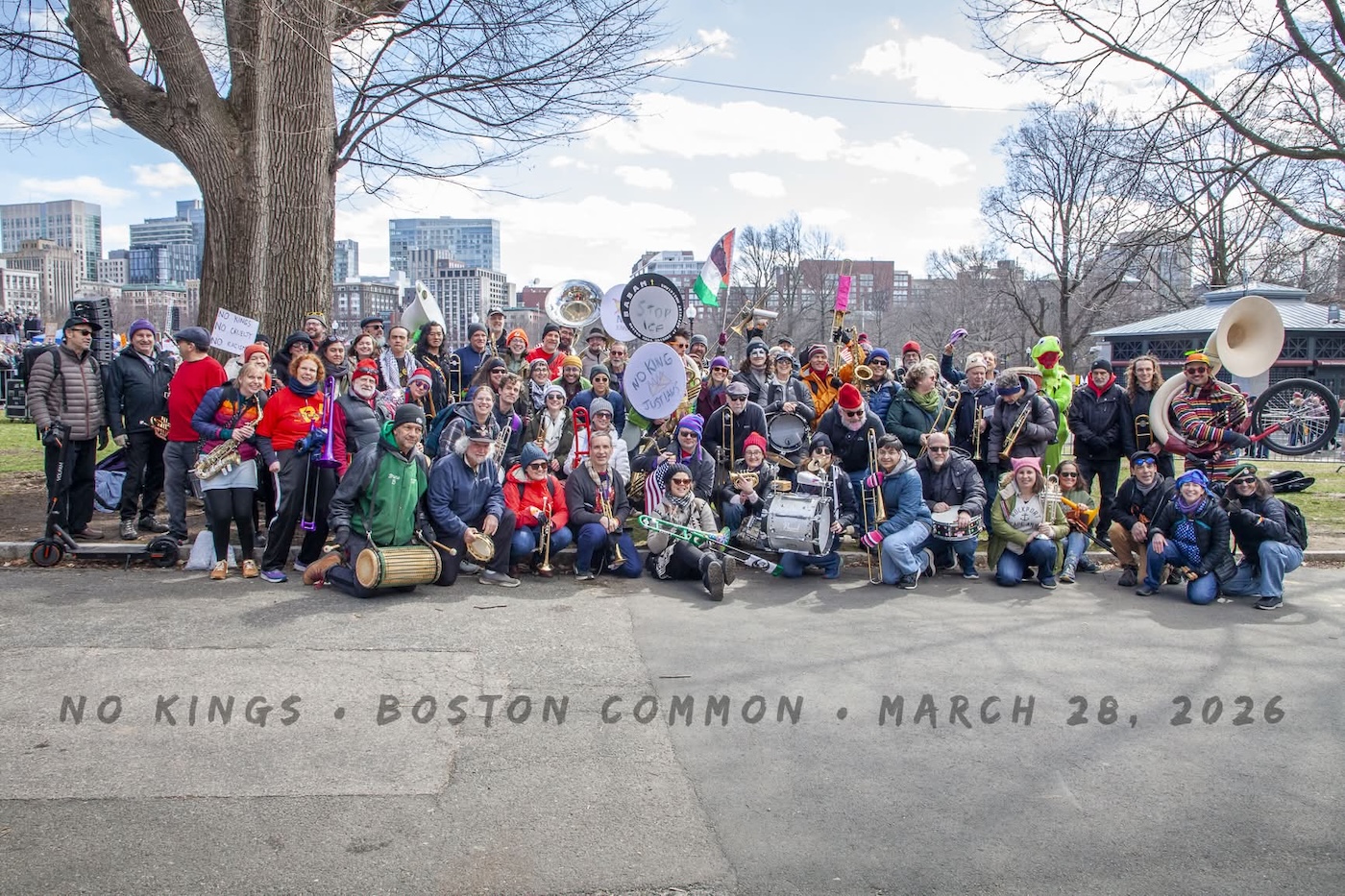
“The takeaway [from Mississippi] for me was a vision of a mass movement powered by music,” said Garofalo. Among other actions, he was a founding member of the legendary Massachusetts Rock Against Racism movement in Boston. He continued, “That has influenced every political decision I have made since.”
“People continue to think of the bands and the music as the entertainment, and when we really get down to brass tacks, it’s all about the speakers. I think that’s a huge mistake,” Garofalo added. “We contribute politics to the event, we are not the entertainment. We can embellish any message there is, we can kick it up a notch… [Music] makes [the chants] more meaningful and encourages people to participate more. All of that builds a movement.”
BABAM performs at protests of all different scales with a different group of musicians each time. Yet their quality of sound is not hindered, according to trombone player Cathleen Finn, because of the flexible culture of HONK! bands, an amalgam of musical protest groups. This culture also allows them to continue playing no matter what, since a brass band isn’t hooked up to amps, or “electricity that can be controlled by the state or by any power in charge,” a trumpet player in BABAM explained.
Members of BABAM emphasized the role bands play in amplifying messages and sound, and in bringing respite to protesters who show up week after week.
“Energizing and joy creation and chant support and that sort of thing can really make a protest that much louder, that much longer,” said Naomi, who plays clarinet as a member of BABAM. “It can be really an important strategy in terms of keeping momentum going, both within an individual protest and then hopefully within the movement as well.”