The Boston Red Sox suck this season.
Sit at any bar or enter any locker room in New England this week, and you will hear some form of that lament.
In more savage years past, however, through decades of heartache and raw humiliation, before the Sox finally shattered the forsaken Curse of the Bambino, a much more common refrain around Fenway Park—the unifying war cry—was Yankees Suck.
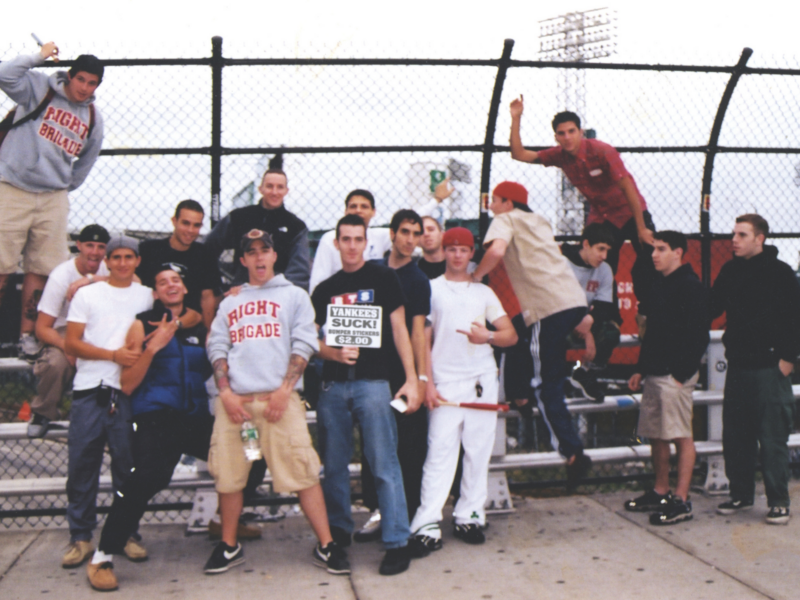
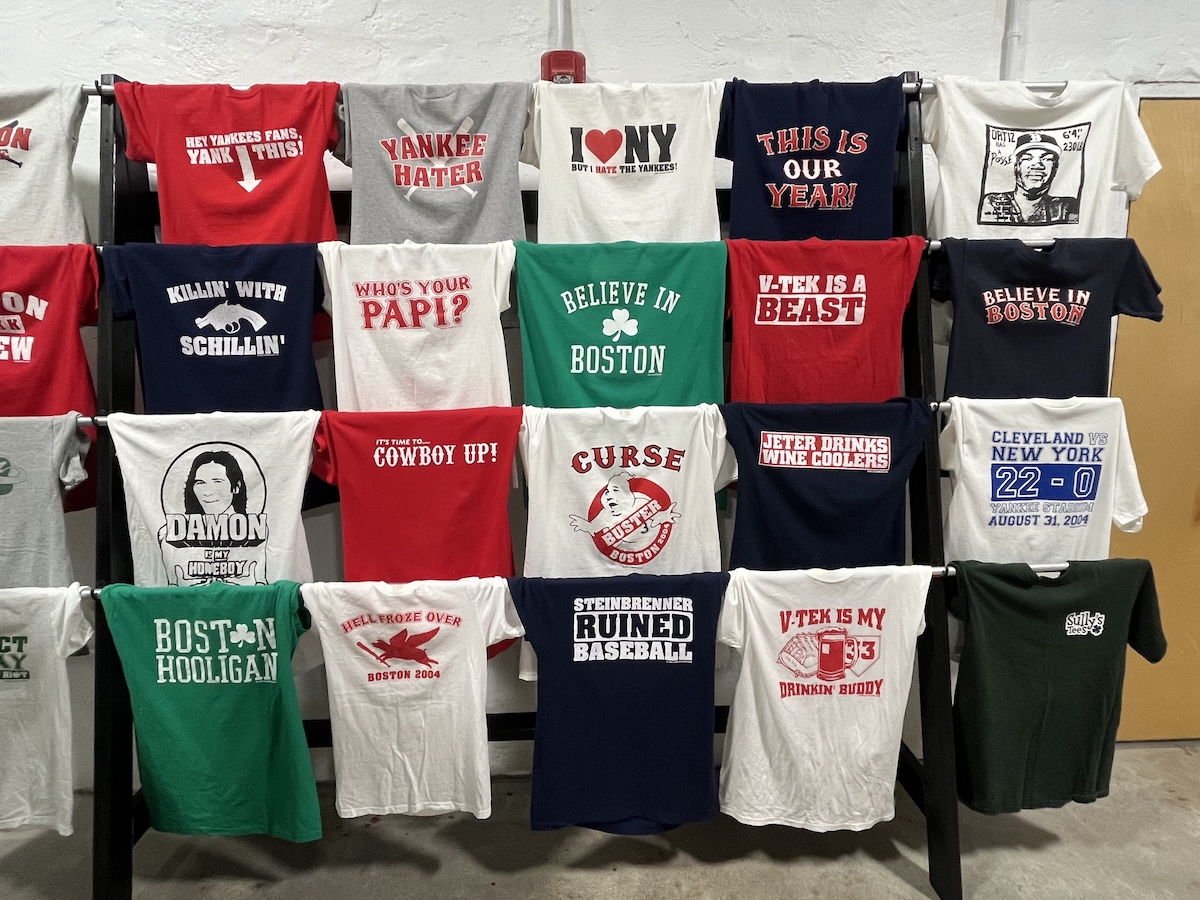
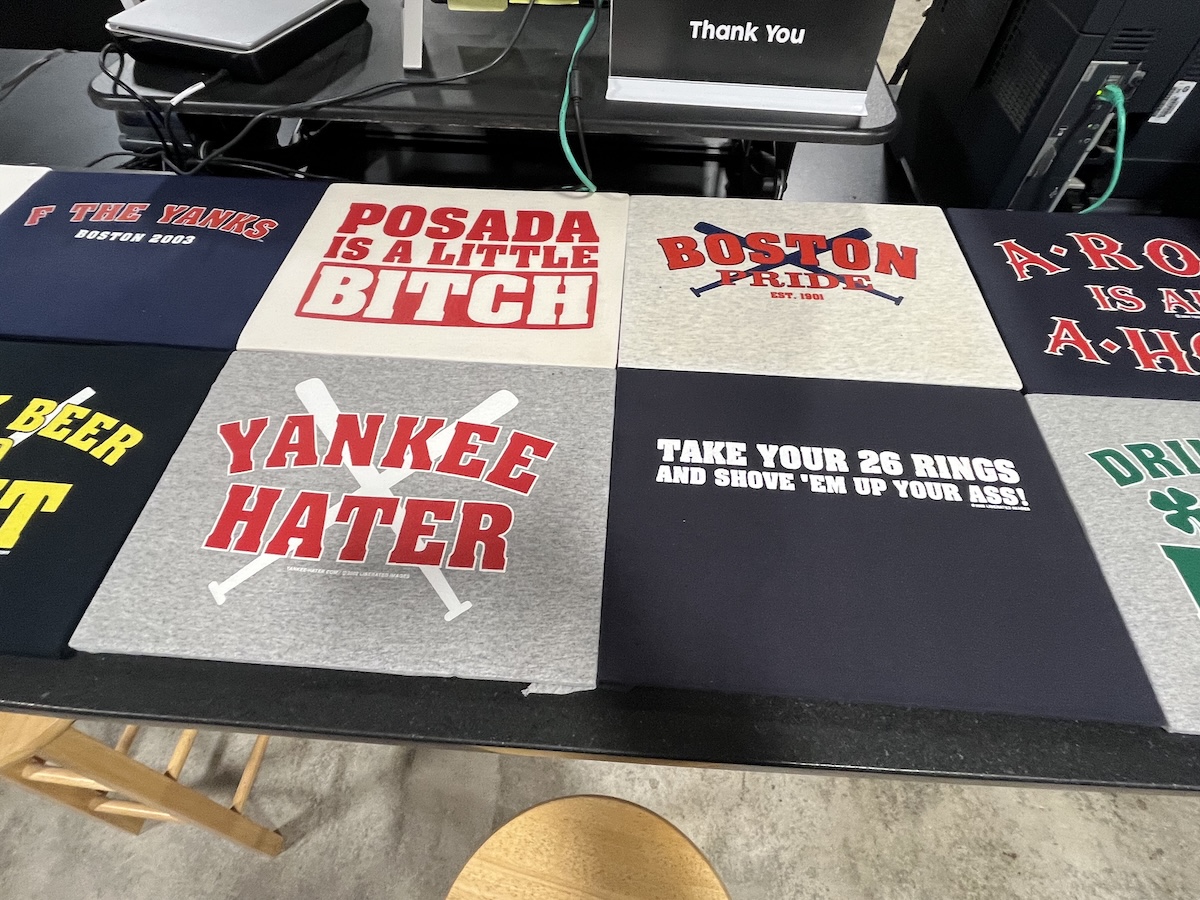
It was the 1990s. A bunch of punk kids made some moves and founded Sully’s Brand, a snide, sarcastic, and often offensive T-shirt and Mass merch line. Pushing parodies of corporate logos in the footsteps of so many skate brands and that master of interpolation Andy Warhol, many of their bait-and-switch slogans fueled new clever foolproof ways to cash in on the city’s longheld baseball agonies by slinging tees, stickers, and pins to Fenway faithfuls.
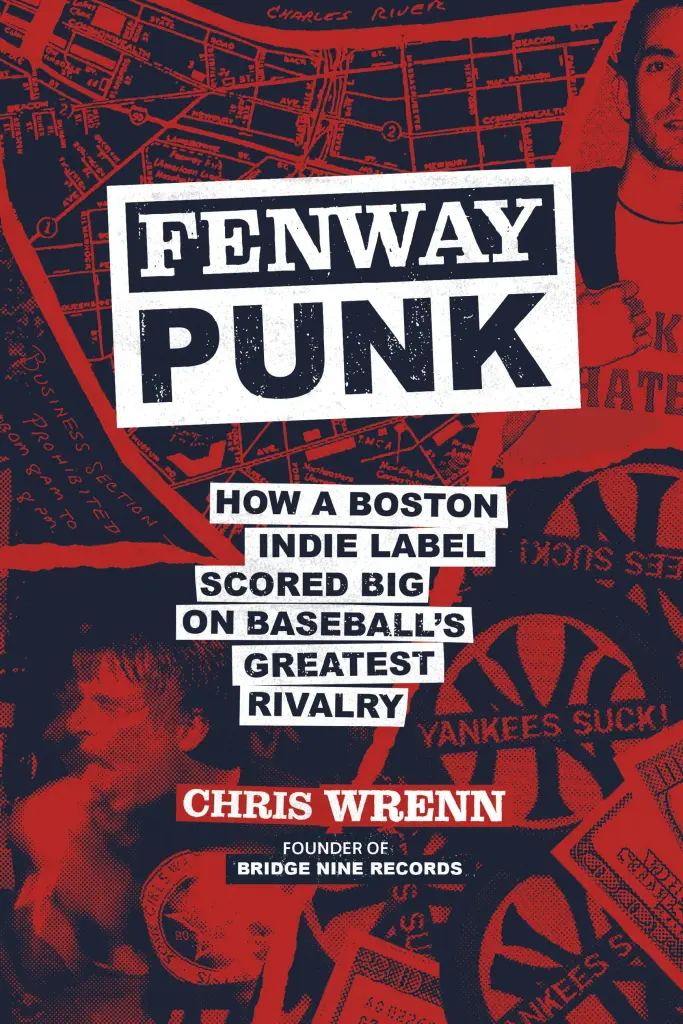
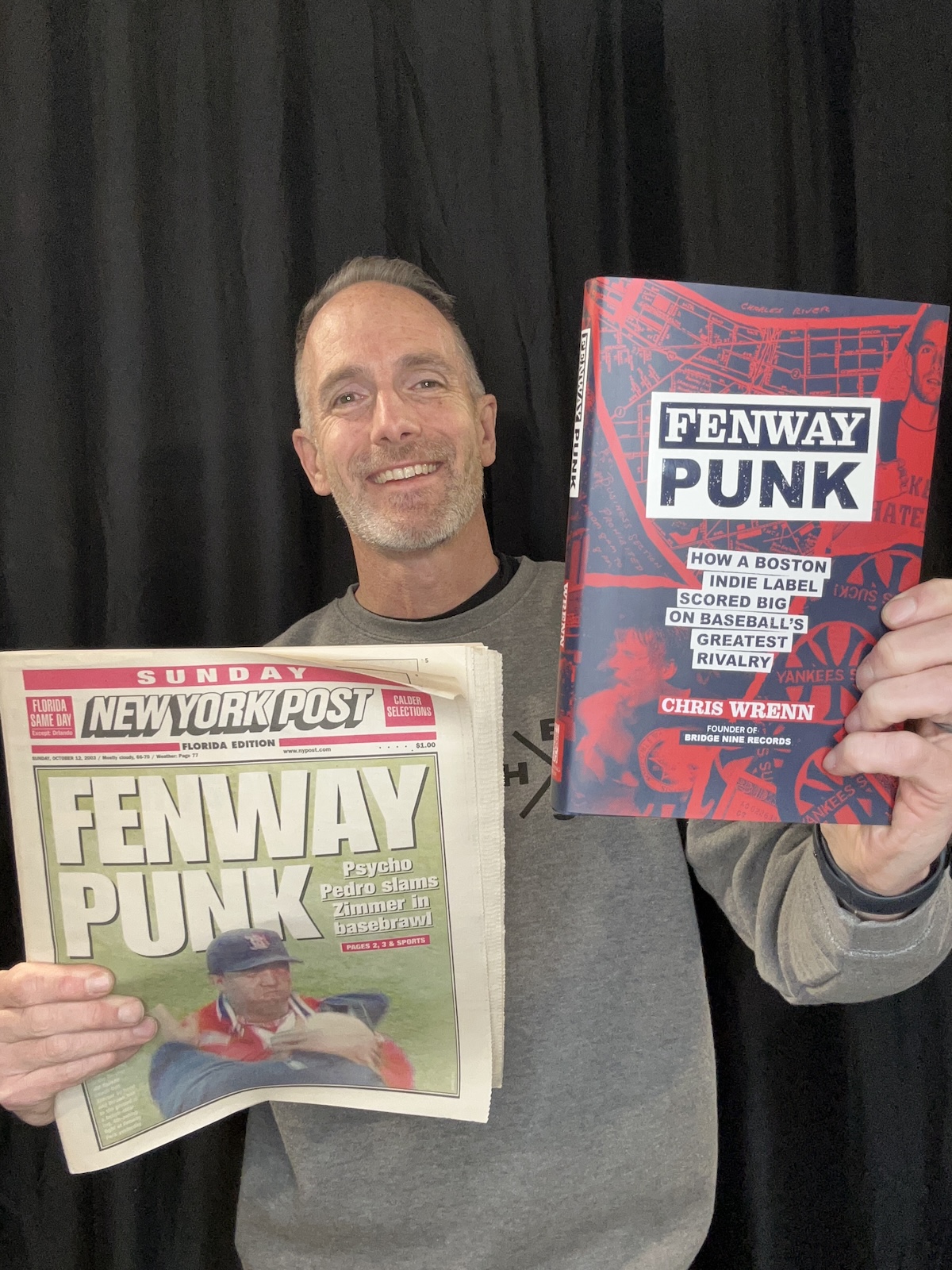
And the story didn’t end with a couple of World Series wins and cheap capitalist praise in Forbes magazine. Not even close. The cash from gear sales helped this crew build an iconic underground hardcore punk rock label, Bridge Nine Records, as detailed in Chris Wrenn’s new book, “Fenway Punk: How a Boston Indie Label Scored Big on Baseball’s Greatest Rivalry” (Running Press).
“It was all bashing the Yankees,” Wrenn said in an interview. “As we started to evolve a little bit, I came up with ‘Believe in Boston’ in 2004.”
That evolution unfolds in his new project, the true story of a Minor Threat fan with major league ambitions. The promo teases: “Since his salad days as a teenage skateboarder, Wrenn has focused on two tasks: releasing albums for his favorite bands, and finding unusual ways to pay for it.”
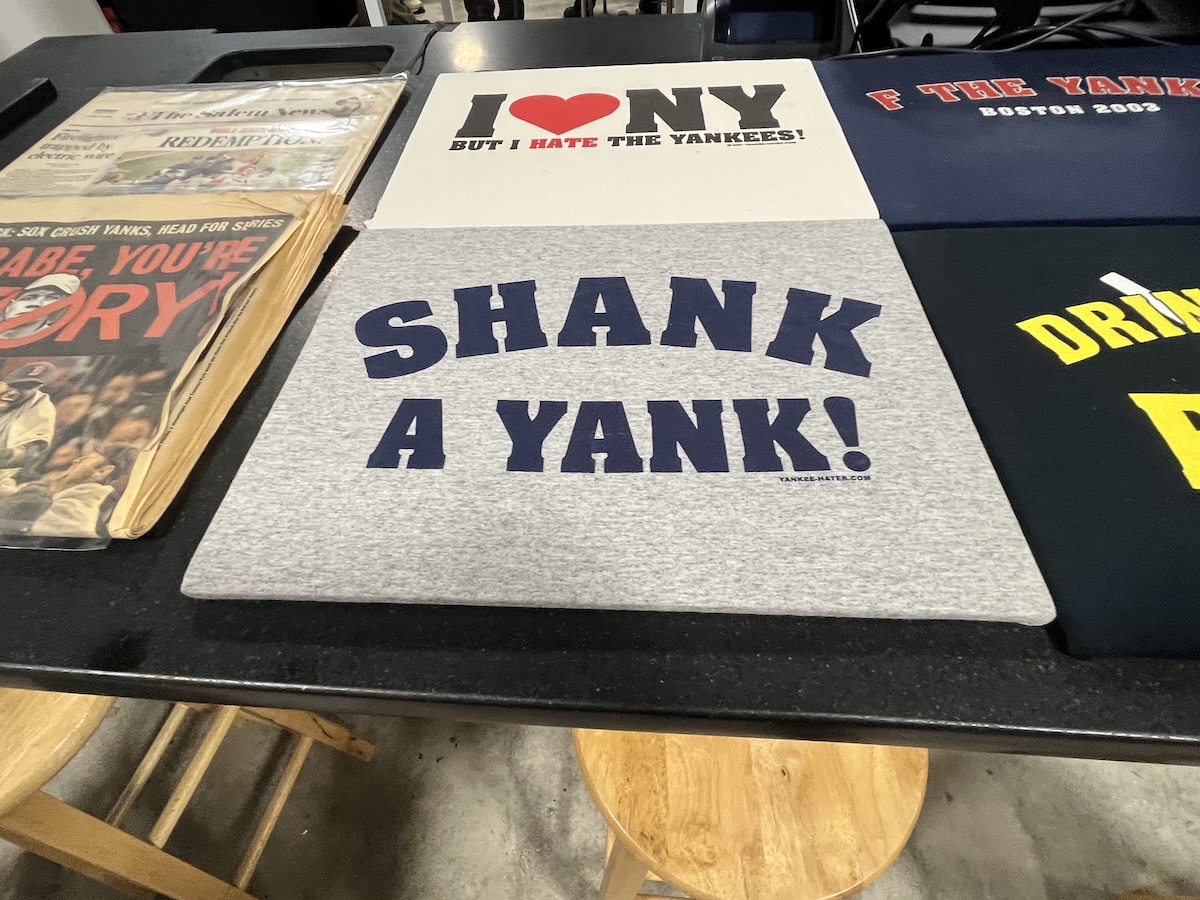
One game-changer somewhat early on was the cheap but cheeky and catchy insult, “Jeter Drinks Wine Coolers.” “That was a design that somebody that worked for me in our screenprinting department suggested,” Wrenn recalled. “I was like, That’s a dumb shirt.”
That dumb idea, however, sparked a new spirit of unity from town to gown—one which empowered the nascent Sully’s team to cash in on the acrimony between American League rivals, and ultimately usher in a new chapter and testament of Boston hardcore.
Selling ‘Yankees Suck’
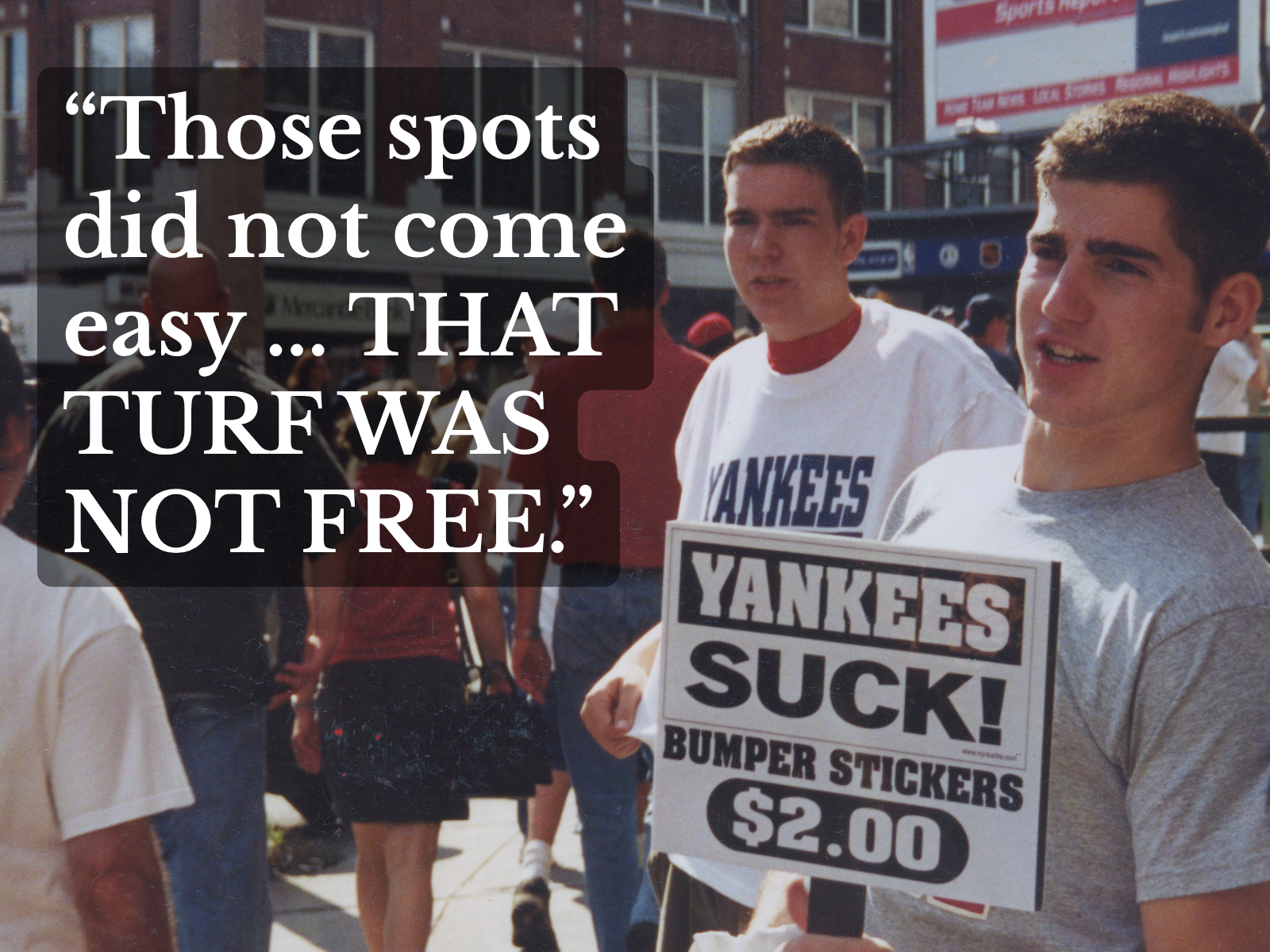
The initial hustle started back in 1995, when the Red Sox were still in the vicious grips of New York’s seemingly eternal springtime stranglehold. Naturally, throngs of angsty suburban punks, many embedded in subterranean music scenes with others bouncing at the clubs on Lansdowne, cropped up in the midst of so much misery, to build a mini empire on “Yankees Suck” merch in Kenmore Square.
In order to hype the Hub and turn a profit, especially through losing streaks, Wrenn needed more than just some sleazy slogans. He needed friends with real determination, who the punk scene had in plenty. On game days, Wrenn and his crew made the short trek from Mission Hill to Fenway, slinging homemade slogans by the bagload.
The late-night shuffle when the bars close was prime hawking time for straight-edge punks to extract funds from drunken jocks and preppy dweebs like money trees.
“I would go down to Fenway with a backpack full of homemade merch, and I would make more money in two hours than two-weeks worth of pay from my job at Tower Records,” Wrenn said. “I was already making all these bumper stickers and T-shirts and stuff for local punk bands, so I started making stuff for sports fans.”
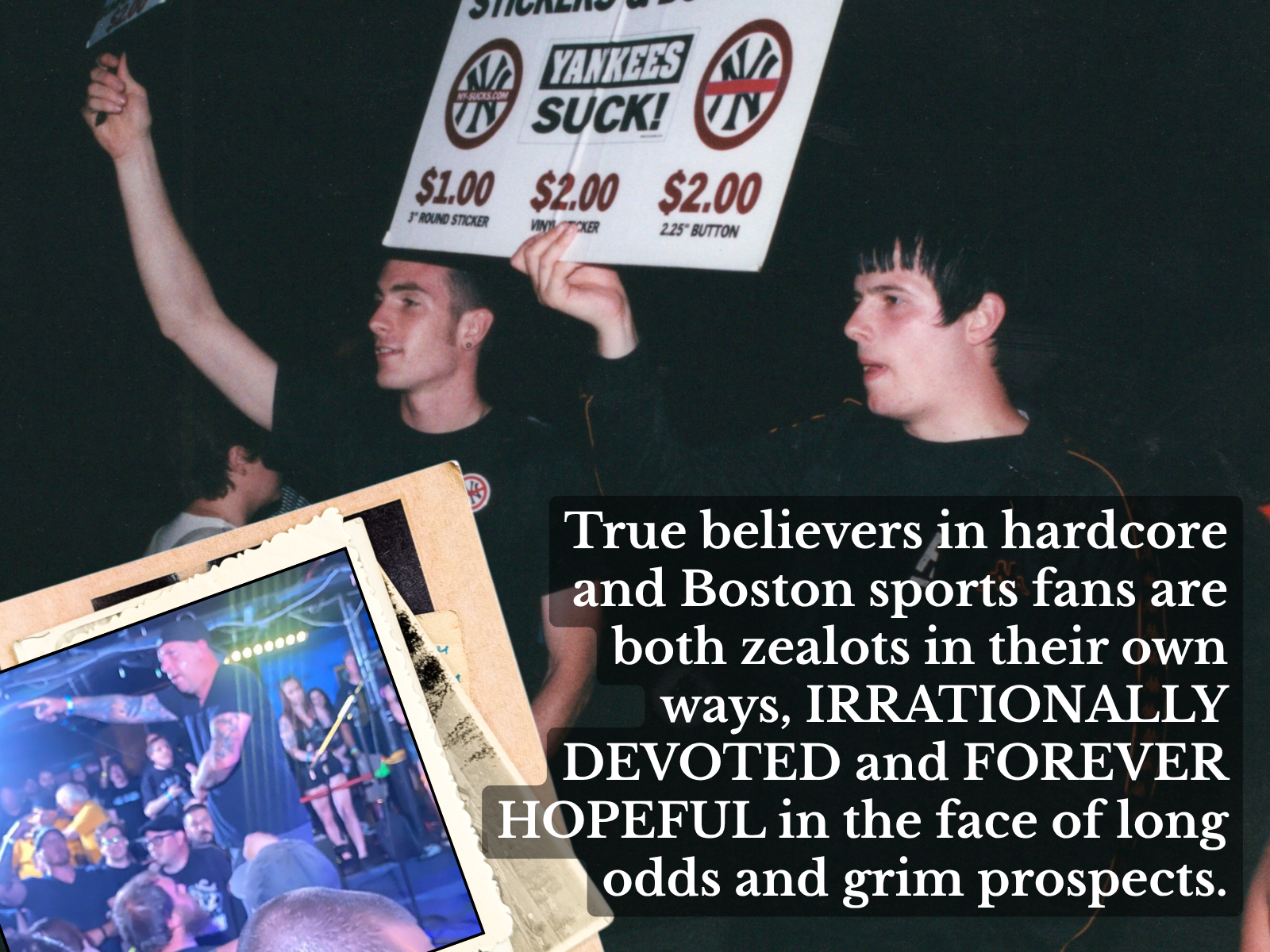
For punk rockers, swearing to a DIY ethos of nonconformity meant smashing the system at large as much as it meant rebelling against the city itself. So what began as a pop-the-trunk messenger bag operation with off-centered “Yankees Suck!” buttons and stickers—one for $2, or three for $5—eventually tallied up to six figures.
The bridge to Bridge Nine
On the strength of Sully’s sales, Wrenn launched and manned the helm of Bridge Nine Records. He started as a somewhat solo label army with a batting average of one release per year in the ’90s, and eventually grew to a 15-to-20 records-per-year operation in the 2000s, mailing, xeroxing, putting ads in magazines and papers, hiring graphic designers, and making daily treks to the post office.
The whole time, Wrenn and friends kept funneling their plunder into the next phase of hardcore punk rock. While labels were gobbling up metalcore bands by the busload, and not paying any mind to hardcore, Bridge Nine put out original material for hundreds of bands and re-pressed classic records that never got their proper recognition at a time when mainstream companies wouldn’t touch the genre.
Embodying the SSD battle cry, Gotta stick together / Gotta stick together / Gotta stick together / Gotta stick together / Like Glue Like Crew, Bridge Nine started local and branched out with other New England hitters, eventually gaining national and overseas recognition. Releases that put them there, among others, came from the Godfathers of New York Hardcore, Agnostic Front, H2O, Terror, Ceremony, New Found Glory, Champion, Cruel Hand, No Warning, Mental, Slapshot, Death Threat, Have Heart, Wrecking Crew, Outbreak, Crime in Stereo, Right Brigade, American Nightmare, Fastbreak, In My Eyes, and Ten Yard Fight.
In one specific case of soft tees financing hard music, Wrenn recalled that the “Cleveland v. New York 22-to-Nothing” shirt, a dig at the Yankees getting rocked by the Indians in 2004, alone paid for everything connected to foundational modern hardcore legend Death Before Dishonor’s “Friends Family Forever.”
“Death Before Dishonor has been fortunate enough to work with Chris and Bridge Nine for over 20 years at this point,” DBD frontman Bryan Harris said. “I still remember having the conversation with Chris outside the Worcester Palladium after one of our shows in 2004 when he was about to sign us. Later that year we ended up in the studio recording the Friends Family Forever record that he had paid for after one of his Yankee rivalry shirts sold like crazy.”
“That one drop had paid for the whole EP,” Harris said. “The label and the shirts have always been intertwined.”
Business versus pleasure
At first, Wrenn never reckoned Sully’s would become the top earner over Bridge Nine. For the first three years, the brand “was just an opportunity to make money,” he said.
“Very early on, we realized that Sully’s was a better business. We would map out our spots. We would go down to Fenway Park. We would sell this stuff to people. We would go home and then the next day, I would get money orders and pay for advertising and music videos and we would pay for a band to go on tour.”
True believers in hardcore and Boston sports fans are both zealots in their own ways, irrationally devoted and forever hopeful in the face of long odds and grim prospects. Rationally, though, while local bands might fill an Elks lodge on a Friday, there’s never any shortage of Sox fans.
“I came in for the 2002 season,” COA, a former Sully’s street hawker and lifelong Boston punk, said. “They were already running in 2001. I sold for two years. My spot was Yawkey Way and Boylston. It was a gas station that turned into a Tasty Burger.”
COA continued: “You could show up sometime in the fifth inning, get your bag or box of shirts, go to your spot, sell from nine to eleven at night and walk with two-to-four hundred dollars.”
Code breakers
Before long, the crew encountered (and enraged) a newfound foe: Codies. “Code enforcement hated us,” COA said. “They would chase and arrest us.”
Technically, they sold legal merch during restricted times, which wasn’t a criminal offense, but could result in a steep ticket. The city’s hawker or peddler permits were only valid between 8pm and 8am, to lessen competition with brick and mortar stores.
“It was way different pre-2004 championship, COA said. “You’d get a hawker peddler permit and they would say it wouldn’t cover selling shirts. Or we were too close to the stadium. Once we started being physical with these losers, they would try to bust us, take our gear and lock us up. Guys would get one hand cuffed, then take off running.”
Bolting like a runner stealing second, they’d flee into the Fens and hide out among lovers, thieves, and muggers. Wrenn recalled playing cat and mouse with some guy named Tiger.
“He was always in the middle of everything,” Wrenn said. “Tiger was hired by Fenway to basically just to keep us away from the park if possible; he wasn’t always successful, and he would chase us around.”
At one point, Wrenn’s crew hired people to follow Tiger and report back with walkie talkies: “There’s one story in the book where he walked up behind me and grabbed my backpack and I just kind of loosened my arms and ran away with him holding my backpack.”
Celtics, Bruins, and the truth
Boston Hardcore was born out of a genre-defining fuck you aimed at the City of Angels with the 1982 release of the “This is Boston, Not L.A.” compilation.
In “Get It Away: A Short Film About SSD,” the late hardcore legend Al Barile said, “There weren’t any heavy bands coming out of Boston back in the day. … I never understood how we have this so-called great music city with Aerosmith and The Cars, but nothing heavy at all. In many ways, the city shunned that heavy music counterculture.”
Wrenn and his friends made sure to pay homage, and when Ten Yard Fight played its final show at Bill’s Bar in October 1999, they dropped their own exclusive merch to commemorate the occasion. The shirts sold out in no time, half to their fellow knuckleheads and the rest to random Sox fans just a knuckleball pitch across Lansdowne—two completely different worlds, now wearing the same shirt.
“The ALCS was a seven-game showdown between the Red Sox and New York Yankees, putting one of baseball’s greatest rivalries on display,” Wrenn writes in “Fenway Punk.” “Chants of ‘Yankees suck’ permeated the air the entire night, and I noted how eager Boston fans were to represent their hometown pride, but not necessarily in a way that was available from the local souvenir stores.”
Such revelations fostered ideas for expansion across town. In the winter months, Wrenn’s team battled to secure turf during Bruins and Celtics seasons. But those plans didn’t always pan out as they hoped.
“Selling at the garden was much tougher,” COA said. “The winter weather. Less spots. Less arena capacity.”
He recalled one specific rift: “Allegedly, Paul Pierce sent out some goons to muscle us at the Garden over the ‘Truth’ Celtics shirts. Think about all these dudes chilling around him wanting to suck up to his money and look like a big dog. I never got the whole story.”
For better or worse, the winters were too cold for talking shit or throwing icy hands with rival vendors. Wrenn said, “The Garden was good because there were only two exits right where we were, so I remember, this was back when there was the elevated train stop right there, and we would set up on the jersey barrier at the bottom of the stairs.”
The hawker turned author continued: “When we would sell the Garden, we could just stand on top of that Jersey barrier and everybody leaving would have to stand and wait their turn. A whole pool of people will be staring at you for 10 minutes while they wait to go up that single file line up into the train.
But the thrill never lasted for long: “Once it’s 20 degrees out, you’re not in the mood to really even interact with anyone. But that’s why some of our shirts back then were pretty aggressive, because we had to get people to kind of stop and laugh.”
Hardcore hooligans hold home court
Back then, the streets of Kenmore Square were dirtier. The neighborhoods were rundown. The average Masshole was more openly hostile. Accidentally stepping on someone’s shoe might lead to haymakers.
Plus, besides Tiger and the code enforcers, there were bucket drummers, storied vendors like the Sausage Guy, and the infernal Jesus Guy to contend with against tides of rushing crowds, all while sketchy scalpers marked their own corners: Buying? Selling?
“Those spots did not come easy,” said Frankie Puopolo, a singer in DBD and Wisdom in Chains and former vendor. “That turf was not free.”
It was helpful to have characters from Bridge Nine, who were otherwise pumping out iconic hardcore albums and touring, around for baseball season. Almost every Boston hardcore band in the early 2000s had someone with a permit hawking stickers or T-shirts.
American Nightmare was the first band on the imprint to go all-in on touring the US and Europe. “I was one of the worst [Sully’s] sellers of all time,” the band’s singer Wesley Eisold told the New York Times in an interview. “They ended up giving me, like, mercy cash just for hanging around in case a fight happened or something like that. I was a cheap enforcer.”
Not only did Wrenn’s team have to compete with the souvenir stands and pro shop, but also common hustlers who sold boosted or bogus team merch.
“Other guys would show up with shirts to sell and we would muscle them out of selling,” COA said. “I would go to the store and buy grape juice and pour it on the outsider’s boxes of shirts. … It wasn’t like it is now. And we are all together. If someone wanted to beef, we would just beat the shit out of them.”
Some circumstances veered toward fatal. “There’s two groups of friends,” Wrenn explained. “We have a bunch of us that are involved in the punk music scene, and then there were friends and roommates that were not necessarily from the punk scene, but were friends of friends.
“As I was funding my record label, I was putting the money into Bridge Nine, and I had a roommate that was putting the money into buying drugs and trying to sell drugs. He ended up getting shot in our apartment one night when we were all there. I was actually sitting with someone from American Nightmare and we were talking about their first tour to the West Coast when the shooting happened.
“I think over the course of writing the book, some of the statute of limitations passed and they were able to approach some of these subjects.”
“One of the dudes who was running one of the selling teams got home invaded and shot in the face in 2001,” COA said. “Bullet hit his tooth and came out his neck.”
New times, new slogans
Things are different these days. The Sox have gone the distance several seasons. Yawkey Way is Jersey Street. Sully’s Brand is better known for outfitting the robbers in “The Town” than for its vendors literally beating out the competition.
“Yankees Suck” has fallen out of fashion. Sully’s doesn’t even sell the shirt any more.
Looking back, Wrenn estimates that he hit every home game for a 12-year streak, from 2000 to 2013, with the peak excitement running from 2006 through 2008.
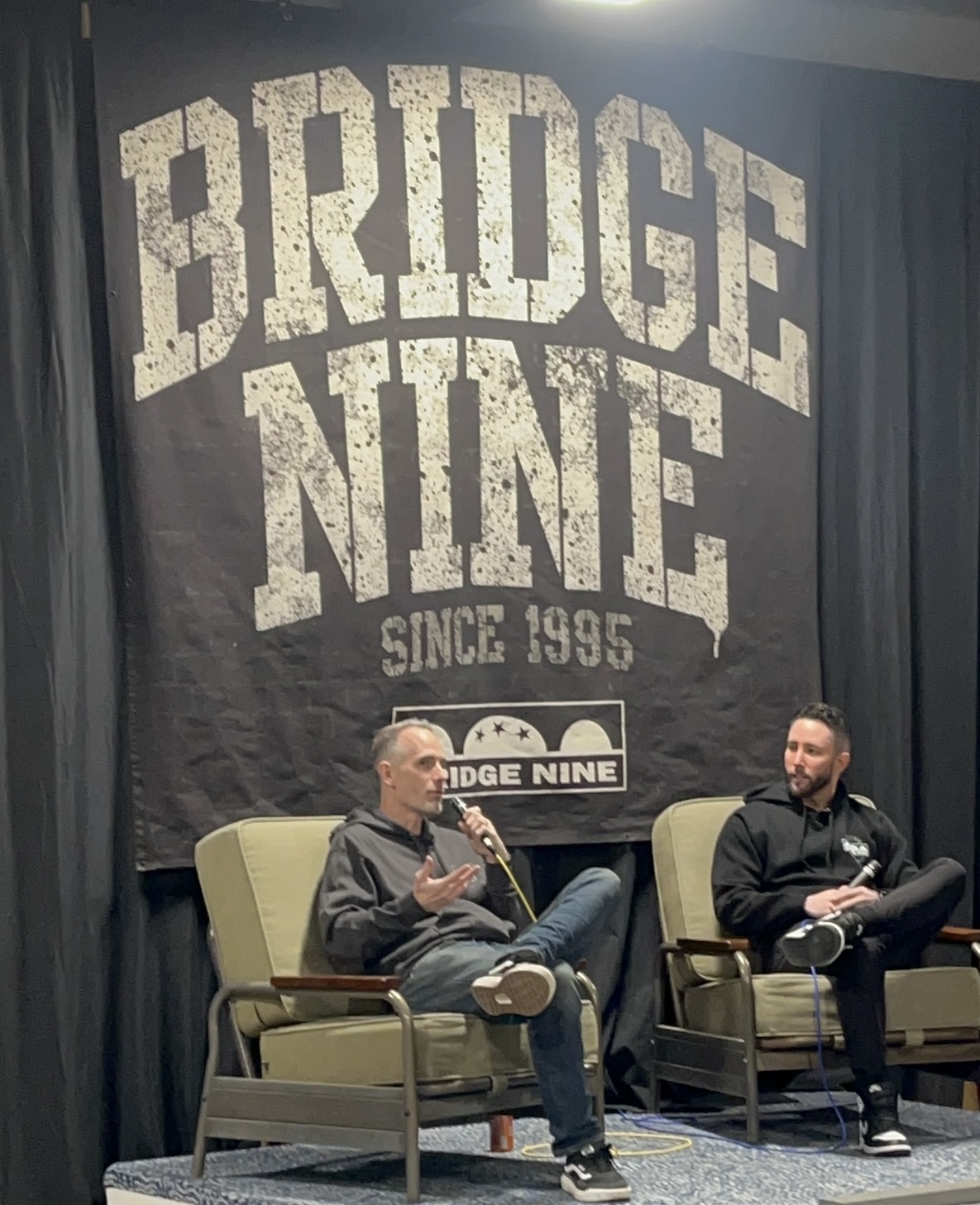
His current home base is in Beverly. After a year-and-a-half of renovation on an old car dealership, Bridge Nine Records and Sully’s Brand finally opened their doors to the public in September 2023. The back of the shop has a function room with a stage.
“Of all the bands that are connected to the record label that play at the shop, the most important show was the Agnostic Front show with Mark McKay, the original drummer from Slapshot, and Jaime Sciarappa from SS Decontrol playing bass,” former Kilslug guitarist and Bridge Nine tradesman Larry Kelley said.
“At one point, Chris Foley, the drummer from SSD, went up and played ‘Glue’ with them, which was historic. They had not played that song together in 43 years.”
And then there is the grind between the legendary moments, which can be rewarding in its own right.
“Bridge Nine has been a label for 30 years. Sully’s has been a brand for 25,” Wrenn said. “Every two weeks, I’m like, How am I gonna keep it going? Realistically.”
“Over the years, there’s been so many times where we’re like, How is each one going to manage on its own? I get kind of pushed back into a corner, and then an opportunity would present itself. And you just have to kind of recognize it. … I think I’ve become very good at recognizing when an opportunity presents itself.”
“Fenway Punk: How a Boston Indie Label Scored Big on Baseball’s Greatest Rivalry” is available in stores and online now.