More than two million Massachusetts residents are covered by MassHealth, yet fewer than half of the state’s dental offices accept MassHealth patients, resulting in limited access to dental care.
According to the last statewide assessment from 2021, while Massachusetts has more dentists per capita than most other states, fewer than 45% of those dentists reported that they accept patients covered by the commonwealth’s Medicaid program.
More recent numbers on in-network providers are not available. But despite programs and pledges to close that gap, anecdotal evidence suggests that it has only widened. Providers cite low reimbursement rates as a primary cause. Asked for comment, a dental group based north of Boston said, “It’s one of the main reasons a lot of offices don’t take MassHealth. Fees are very low and don’t cover the actual services that they provide.”
There are some potential legislative fixes, or at least band-aids, in the works. In the meantime, as the aforementioned study noted, “When individuals lack access to oral health care, they may turn to the emergency department for care that could have been prevented or treated in a dental office.”
MassHealth coverage
MassHealth, Massachusetts’ Medicaid program that provides dental and health coverage for low-to-moderate income residents, covers most services depending on various factors and premiums. Jointly funded through the federal and state governments, MassHealth received more than $22 billion in the state’s FY26 budget.
In practice, providers submit claims through MassHealth’s online portal, which collects patient information, procedure codes, tooth information, and provider details. With some exceptions, claims must be submitted within 90 days. MassHealth will then approve or deny; if approved, reimbursements are supposed to be issued within 30 to 60 days.
When MassHealth patients are rejected
Dental offices that reject MassHealth patients before notifying system administrators, as required under state regulations, will be fined by the Attorney General’s Office. In order to legally stop taking MassHealth patients, practices must officially update their status.
The AGO reached a settlement with a Brighton dental office in 2021, after finding that the practice had “refused to accept new MassHealth patients.”
According to the state, “the AGO has authority to monitor trends in the health care market, including patient access issues.”
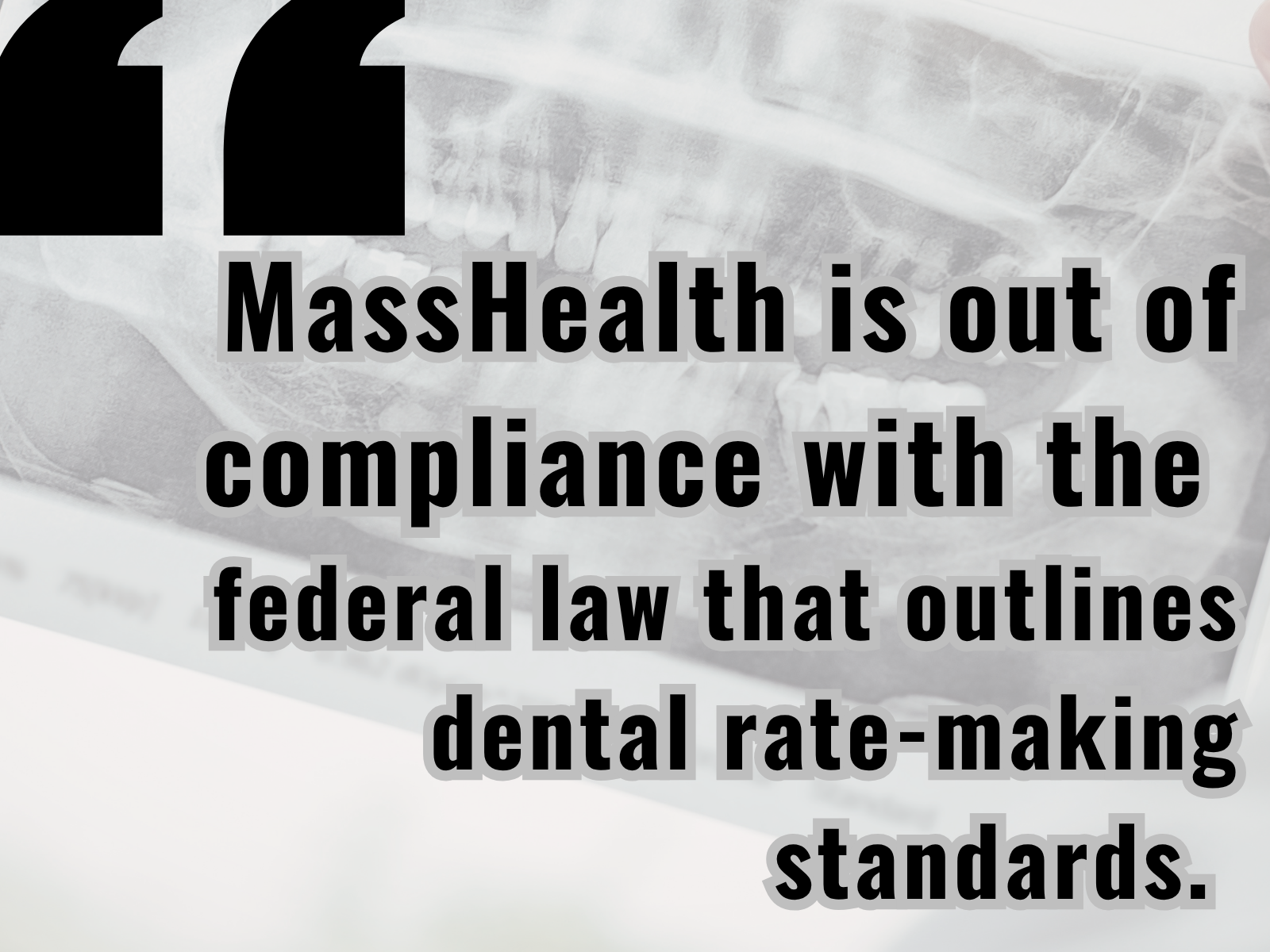
Nationally, under the federal Medicaid Act, states must ensure adequate access to dental care for children. Consequently, “MassHealth is currently out of compliance with the federal law that outlines dental rate-making standards.” That’s according to a 2024 letter that the Massachusetts Dental Society sent to the state’s Executive Office of Health and Human Services. The correspondence listed multiple ways in which “MassHealth has violated federal payment law,” and noted “historical noncompliance” with the law.
Dr. Steven Spitz, president of the Massachusetts Dental Society, explained, “Dentists are not penalized if they decide to close their practice to new MassHealth patients. Dental practices have the flexibility to determine their level of participation in the program, with their main priority always being to provide quality patient care. The long-term strength of the program depends on making participation straightforward, sustainable, and manageable.”
The MassHealth press office did not respond to multiple requests for comment. [In a recent feature, BINJ examined how the Department of Public Health, also under the EOHHS, has apparently been flouting records requests made by journalists].
Impact on patients
“It’s hard, you know. I feel like it’s so out of the way.”
One Greater Boston resident insured by MassHealth who spoke to BINJ for this article said that limited provider participation and inconsistencies result in difficulty finding coverage nearby, along with pressure to travel long distances for care.
Delays in preventive care can lead to compromising infections, untreated cavities, and gum issues. “I believe it’s prolonging my periodontal disease,” another MassHealth patient said.
In researching this article, we contacted a dental office in Boston that was listed in the MassHealth provider directory as accepting new patients. Contacted by phone, someone at the office said “[the practice] does not do that.”

Aiming for state compliance and improvement
There are no current executive initiatives underway to prevent the declining numbers of dentists working with MassHealth.
“Although dentists are focused on serving patients, there is some uncertainty with the program due to historic issues with benefit reductions, reimbursement delays, administrative challenges, and low reimbursement levels,” Dr. Spitz of the Mass The Dental Society said. “These issues raise concerns about network stability and could jeopardize provider participation moving forward.”
Some have encouraged dental offices to accept MassHealth. To that end, there may be legislative fixes in the pipeline. Testifying last year before the state’s Joint Committee on Health Care Financing, Dr. Kadambari Rawal, a clinical associate professor of general dentistry at Boston University, advocated for a bill that would incentivize dental offices to participate.
As the Henry M. Goldman School of Dental Medicine summarized the legislation, “An Act Increasing Access to MassHealth Dental Providers will create a pilot program in 10 municipalities across Massachusetts that have a high number of MassHealth members but limited access to dental services and provide supplemental payment to eligible dental providers.”
State Rep. Edward Philips, a sponsor of the “Take 10” bill, told BINJ: “Too many MassHealth patients struggle to find a dental provider, despite having coverage. I believe expanding access to care requires meaningful partnerships with providers and the Take 10 bill does just that. By offering targeted incentives to increase provider participation, this legislation will help close the gap between coverage and care.”
“[I believe] dentists should be incentivized to accept more MassHealth patients into their practices to reduce burnout and offset the administrative burden of filing claims,” Dr. Rawal testified.
A proposed thousand-dollar cap
The prospect of more pearly smiles recently darkened.
In her FY27 budget proposal, Massachusetts Gov. Maura Healey proposed a $1,000 annual cap on MassHealth coverage of adult dental procedures as part of an effort to curb rising Medicaid spending. Under the plan, pediatric dental coverage would remain uncapped. The governor has noted that President Donald Trump cut more than $3 million from the commonwealth’s federal funding for the program.
“We can’t bankrupt our state while we try to address the federal shortfalls,” Healey said in a January press conference. The budget proposal, however, has raised concerns in the dental community, since MassHealth currently does not impose such an annual limit. Dr. Spitz called it “antiquated and insufficient to meet current care demands.”
State officials have said the measure is about controlling health care costs. According to news reports, the cap was designed to save the state up to $120 million. Spitz disagreed: “Patients will be compelled to pay out of pocket or delay vital treatment, undoubtedly increasing visits to already overburdened emergency rooms.”
He added that the thousand-dollar cap “will also affect the Boston-area dental school clinics, which primarily serve MassHealth patients.” “Their ability to treat patients will be restricted,” Spitz said, “resulting in financial and educational impacts on the clinic.”
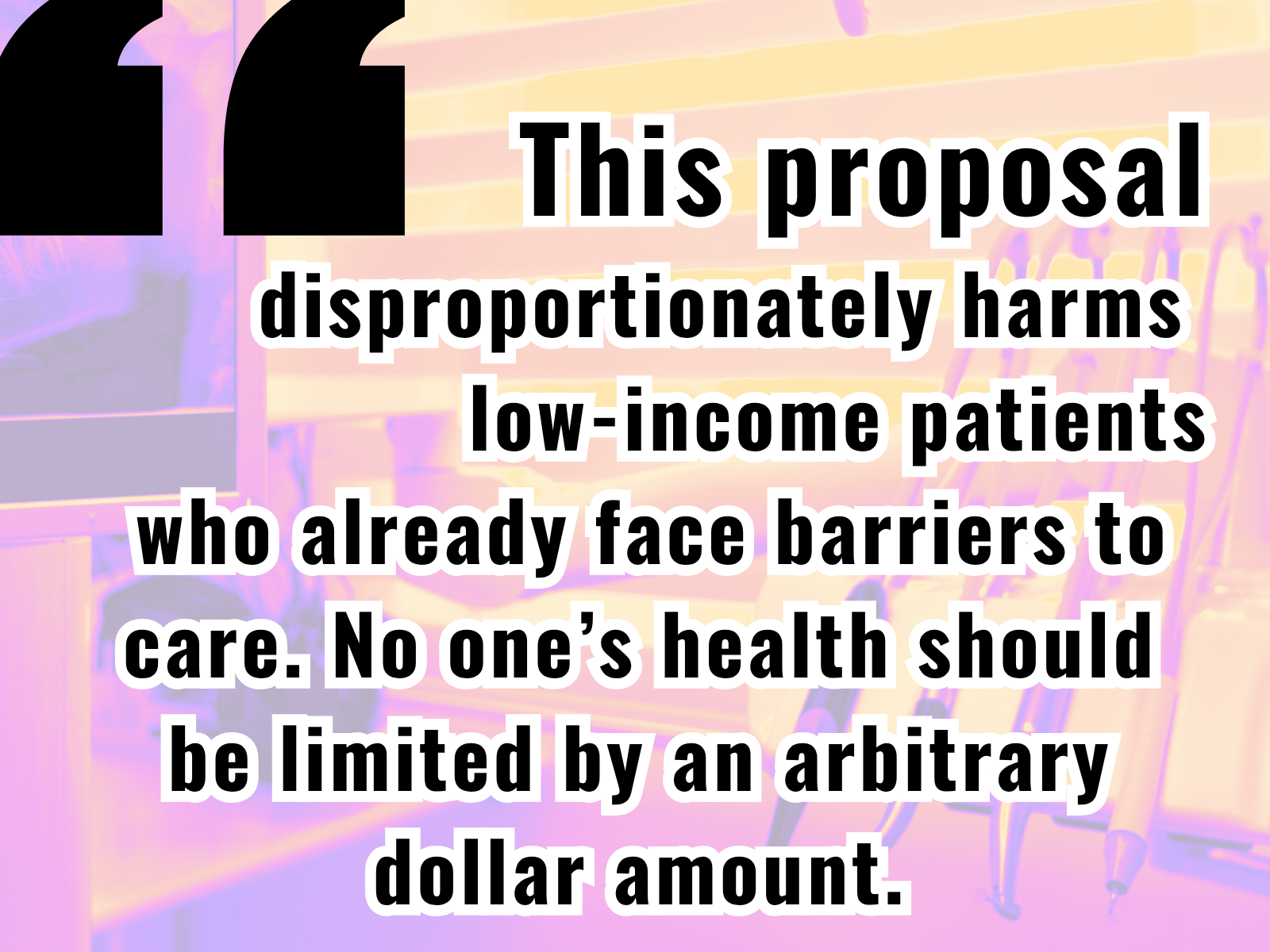
With lawmakers ironing out the FY27 budget, dentists and patient advocates launched a petition to push back against the cap. It reads, in part: “This proposal disproportionately harms low-income patients who already face barriers to care. No one’s health should be limited by an arbitrary dollar amount. Prevention and early treatment are proven, cost-effective strategies that protect both patients and public resources.”
“The MDS urges lawmakers to maintain comprehensive adult dental coverage within MassHealth and reject the proposed cap to ensure every patient across the commonwealth can continue to access quality dental care,” Spitz said. “If practices can’t provide quality care to their patients because of this cap, leaving the program is a possibility. We can only speculate how patients and providers will be affected.”