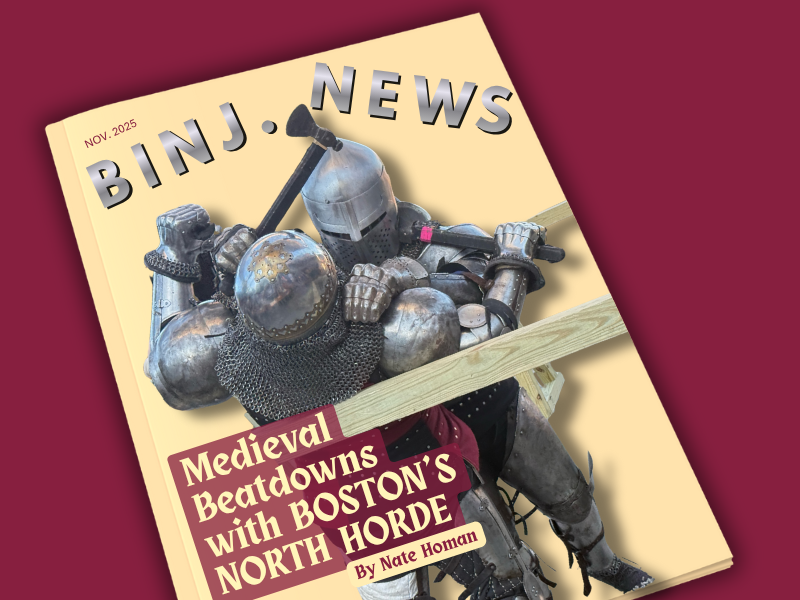
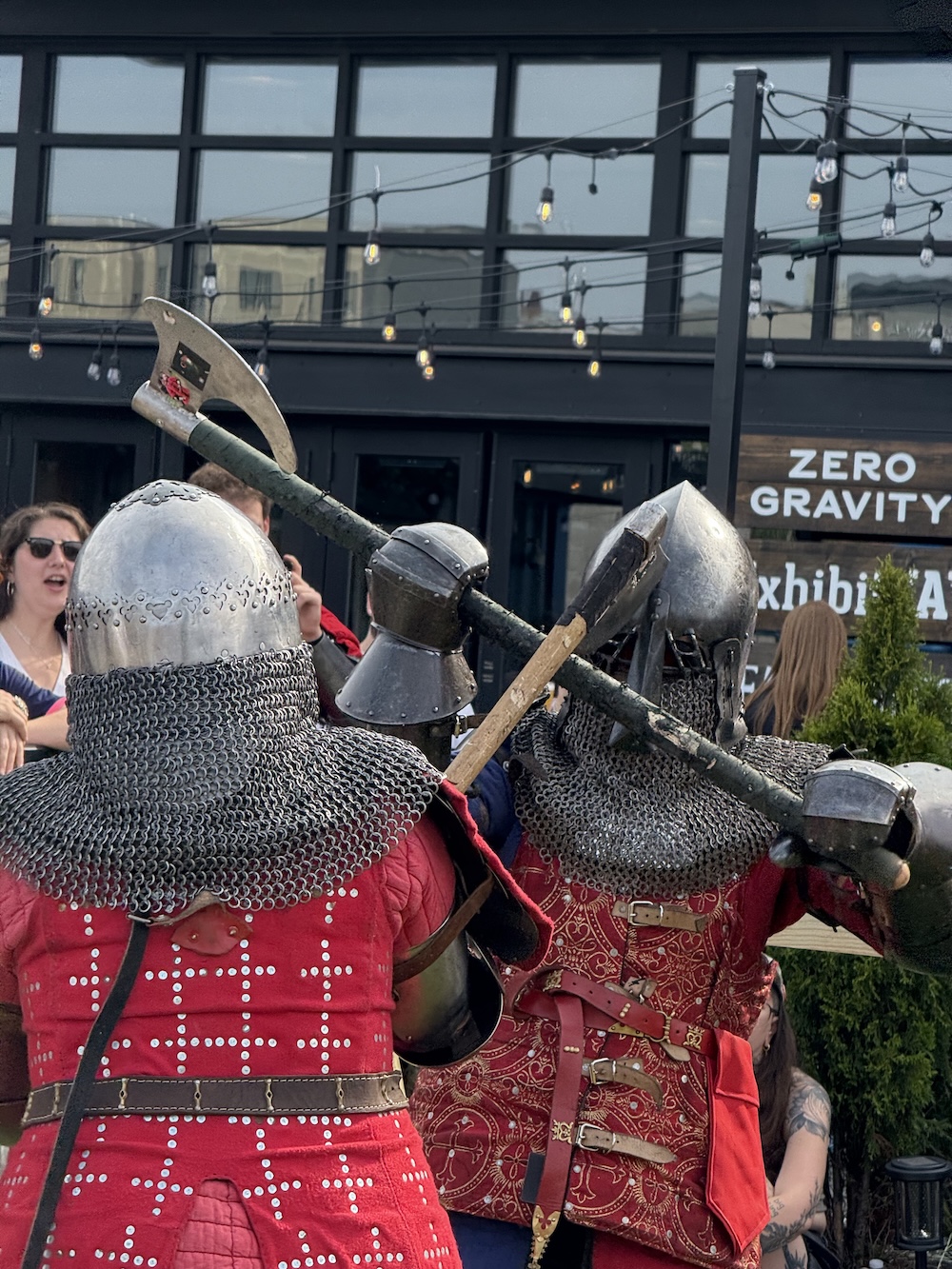
The midday sun hits hard on the steel swords, axes, halberds, and helmets of the North Horde.
For this summer weekend afternoon, warriors transformed a beer garden in the Burlington Mall into a medieval battleground. It’s a scene out of the Lord of the Rings, within striking distance of a Lord & Taylor.
“They all have enough steel and other appropriate materials to absorb the brunt of an attack.” Anton Molokov, the group’s resident referee and MC, explains the sport between battles. “Ultimately, it’s a thin line of survival.”
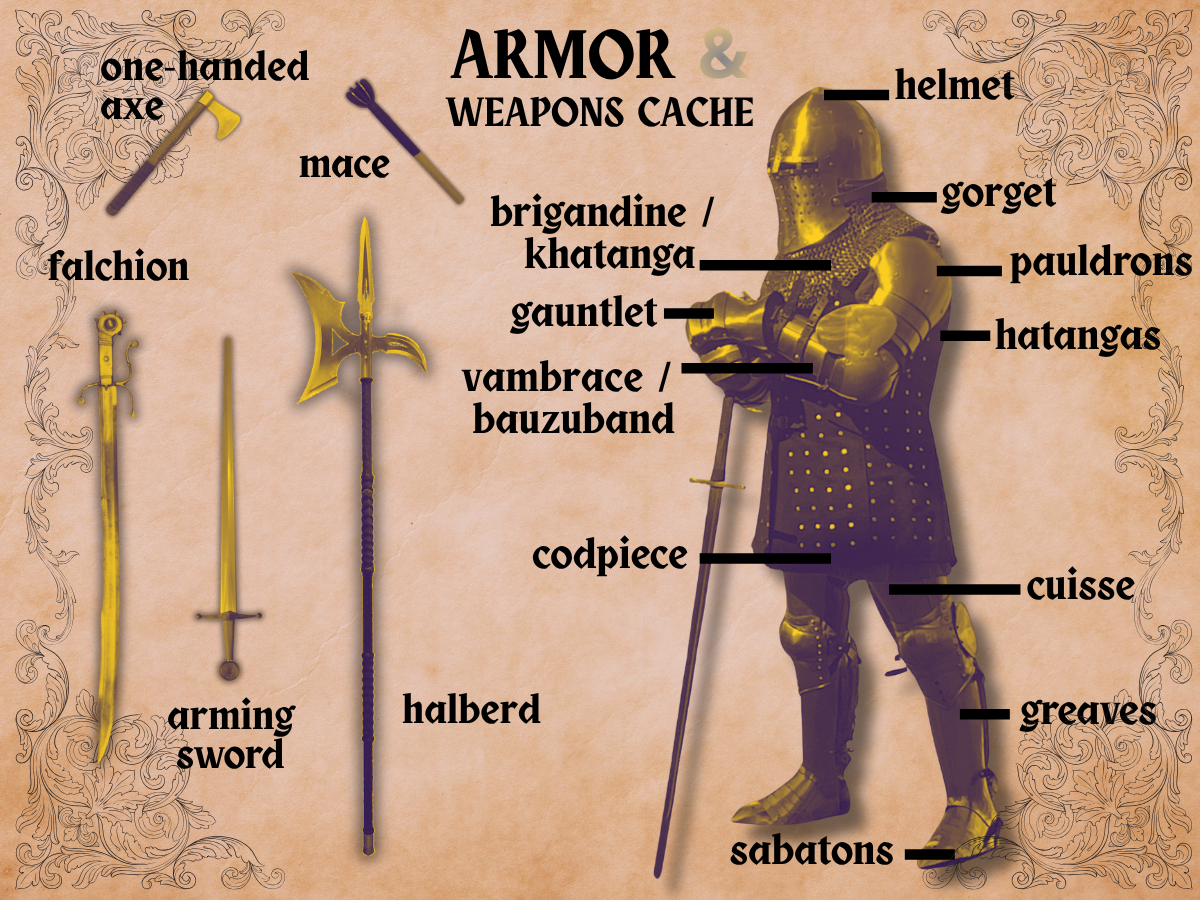
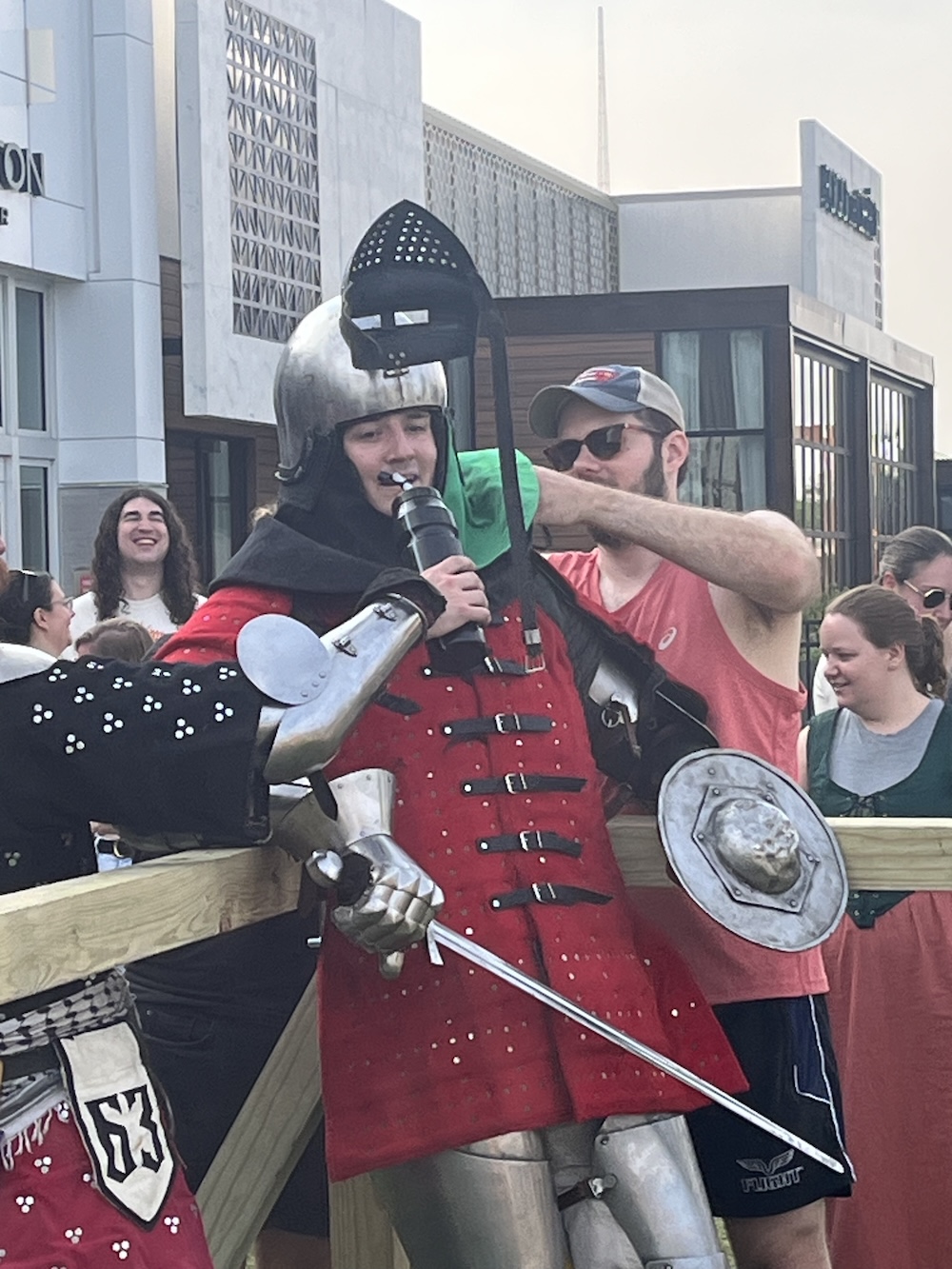
Honoring the past is the cornerstone of armored combat and steel fighting culture. And it’s a heavy commitment, with a full suit of battleworthy 14th Century bulwark weighing anywhere from 40 to 70 pounds.
And that’s without the weapons.
“Just the helmet alone could be 18 pounds,” Molokov says. “So everything is very hot, very heavy, and exhausting.”
How to slay
The rules are fairly simple …
There are three one-minute rounds, with one-minute rests in between.
Kicking, punching, judo-style leg throwing, pinning an opponent to the walls, wrestling, combined with swinging a melee weapon at full speed are all legal and even encouraged in order to drop an opponent.
The blades are too dull to sever limbs or puncture vital organs, but stabbing, applying joint locks, targeting knees, back of the neck, or the top of the head when an opponent is bent over are strictly forbidden.
Otherwise, opponents are fair game, so long as they are on their feet and are properly suited up.
If no one falls, then the bout is scored by points.
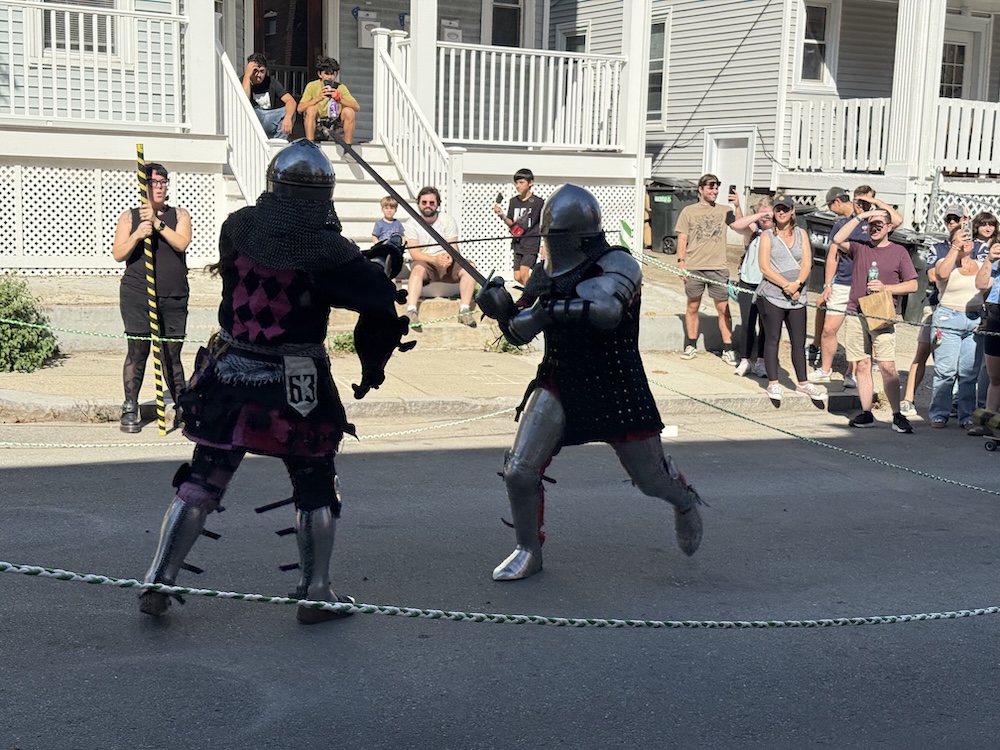
“When it’s one-on-one, they are using their weapons, punching with their shields, kicking, grappling maneuvers and technique,” Molokov says. “Everything counts.”
“The goal,” he adds, “is to dominate your opponent from round to round.”
The “ring” for individual fights is 15 square feet marked by pressure-treated four-by-four wood posts arranged like barricades.
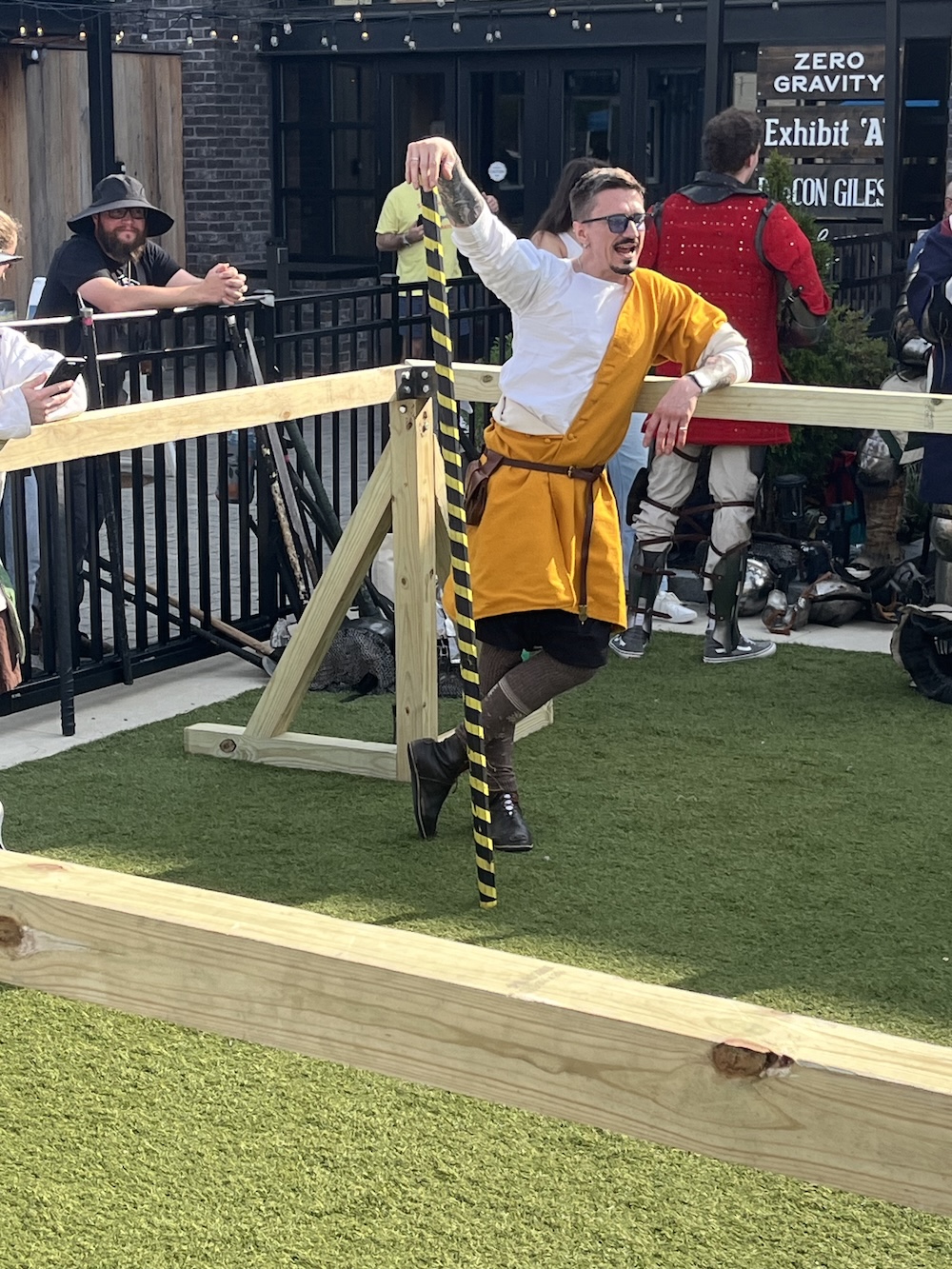
Marshals in canary yellow tunics referee the scrums, and enforce a yellow card/red card system commensurate with how unchivalrous the misdeed. The same code applies to any knight looking to go steel toe-to-toe against a single foe or in the bedlam of multiple player combat.
Making new fans
Tiana Issa, a 23-year-old, is the hero of the day at the Battle of the Burlington Mall Beer Garden.
“I don’t have any other martial arts training,” Issa says in a post-fight interview. “This is my first combat sport ever.”
The steel fighter continues: “In my neighborhood, I went to a little community market and there was an advertisement for the Horde at Notch [Brewing] in Brighton. It was so cool. It was also so funny at the same time. A month later, I’m one of the people in the ring instead of watching from the outside.”
For two hours in Burlington, wide-eyed onlookers stood quietly stupified. Transforming a gastropub into a Game of Thrones-style throwdown is an uncommon occurrence to say the least. Initially perplexed, the crowd gasped and offered bursts of awestruck applause each time a warrior’s blade screeched on a direct hit.
The fans roared each time refs ended the rounds, but the fighters could hardly hear it in their helmets.
International battleground
The quest for authentic competitive armored combat, known as “Buhurt,” originated in Russia, Belarus, and Ukraine in the 1990s. Derived from a French term for an arms tournament in medieval times, Buhurt is “an umbrella word for the sport.”
The International Medieval Combat Federation and Buhurt International are the two official worldwide leagues. Their United States branches are the American Medieval Combat Federation and Medieval Combat USA, respectively. There are also independent leagues, like Armored Combat Sports, Armored MMA, and Armored Combat Worldwide, that run their own events.
The international World Cup, the Battle of the Nations, has been held in various locations throughout Eastern Europe.
In some circles, the Battle of the Nations is a far, far better thing than the Superbowl, the Kentucky Derby, and the lower Oakland roller derby finals all rolled into one. These fights attract a very special breed. But recently, another war interfered.
“Mostly the organization was run by Russian sponsors,” Molokov said. “When the war in Ukraine started, a lot of European partners refused to communicate and work with them. … So the whole thing collapsed.”
Stateside, steel armor fighting is gaining strength. Local, regional, and national squads are springing up anywhere swordplayers are looking to step their game up.
“Our gym has people from all walks of life who show up and want to fight,” North Horde Co-Captain Kyllian Twiss said as he inspected a sword at an armor repair demonstration at Christian Hester Park in Allston.
Twiss added, “But only the ones who push through training and prove that they’re ready to fight earn the privilege of fighting in armor.”

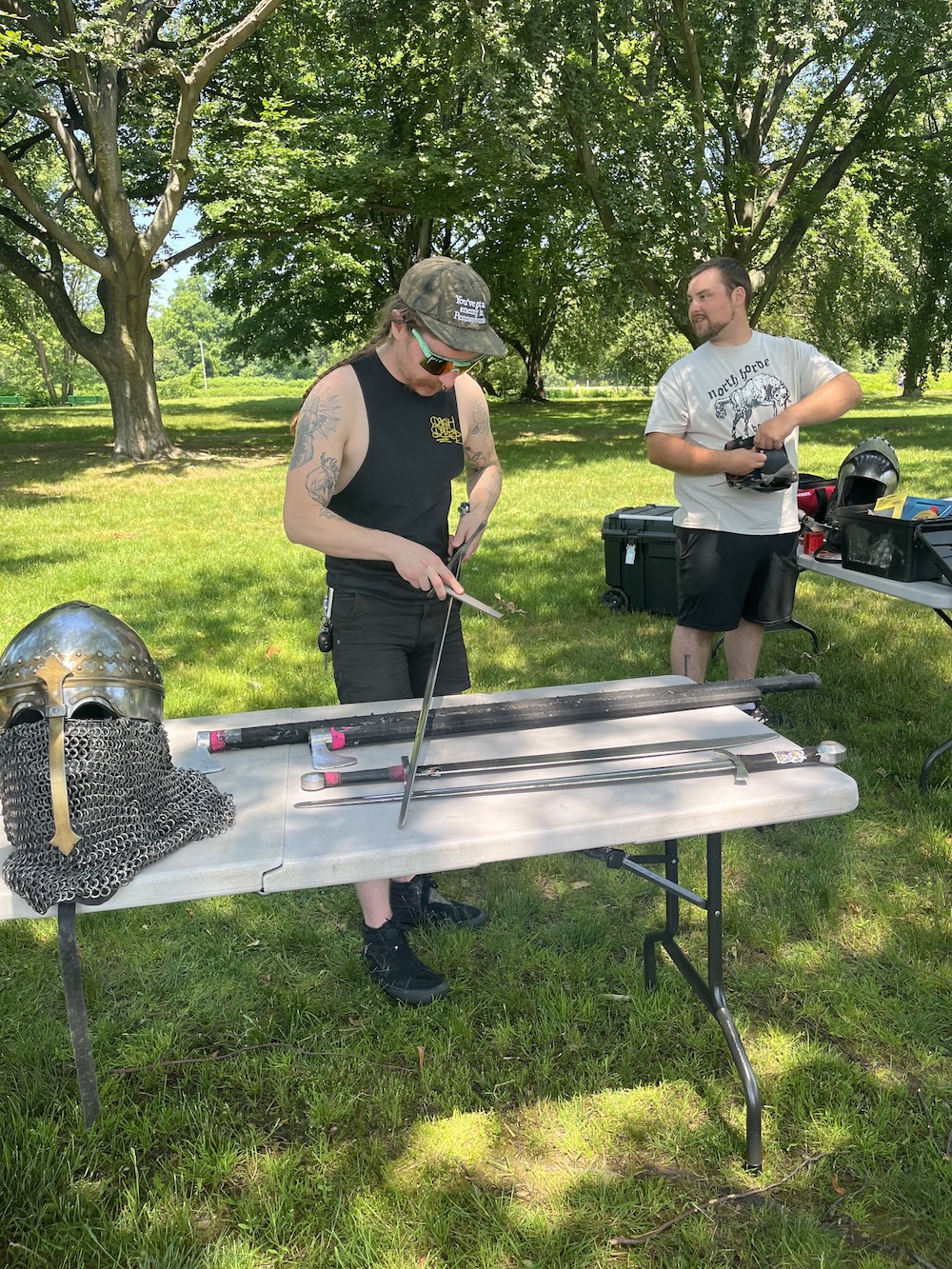
Heavy metal kings
Armored combat bouts are far more brutal than other contact dueling styles such as fencing, kendo, escrima, competitive knife fighting, kalaripayattu, silambam, Fechtschule, or competitive pillow fighting.
In actual battle, combatants are far more likely to suffer from exhaustion than from grievous bodily harm.
“It’s pretty hard to knock somebody out,” Issa, the 23-year-old neophyte in shining armor said. “But a punch from the buckler shield is really disorienting.”
Unlucky berserkers who get their bell rung hard enough often experience what’s known among fighters as “helmet horror,” a shell-shock sensory deprivation like a hall of mirrors in a metal husk.
“It gets so loud in there,” Issa added. “If you panic or lose sight of your opponent, it’s like tunnel vision. Plus the heat can create claustrophobia. Helmet horror is no joke.”
These paladins sport traditional trappings modeled after the Eastern European, Mongolian, and Persian arms and aegis straight out of the Middle Ages.
The pre-Renaissance Age regalia is properly weighed and inspected for cracks, nicks, or burrs, in order to minimize the risk of mangling or mauling an opponent.
“There’s plenty of smiths that make quality gear,” Twiss said, advising “anyone starting out [to] definitely talk to their team leadership and experienced fighters about what they want.”
He added: “Different smiths make different gear and everyone has a preference. Most of the best smiths are located in Eastern Europe, but there’s a handful of decent ones in the Western Hemisphere.”
These suits are distinctively different from styles associated with King Arthur or the Crusades.
“In the Eastern European and Persian style armor, you would have more of the chainmail and the hidden plates under the chainmail,” Molokov said.
The North Horde’s MC-referee added: “You can ask for specific designs as strategic adjustments. The question then is, Do you want to sacrifice coverage for mobility? Less weight means more speed, but less protection. …
“Heavy armor for heavy weapons is always a good rule to live by.”
Team combat
A standard duel is a matched weapon one-on-one bout with scoring based on the number of clean hits. Another common form of combat is an armored MMA bout, a one-on-one with opponents of a similar weight class with weapons, grappling, kicking, wrestling, and hand-to-hand combat all legal.
There are also team fights, better known as melees, which mostly range from three-on-three to five-on-five. Bigger tournaments host ten-on-ten and thirty-on-thirty bouts, while some massive tournaments feature hundreds on each side.
“When it comes to team fights, many versus many, there’s plenty of moments when you can be held by one guy while the other will be beating the last breath out of you,” Molokov said.
“So you need something sturdier, something covering more surface because you want to have all the impact absorbed. So it’s different styles of fighting in different sets of armor.”
Team battles are a glorious amalgamation of strategic surges and frantic, frenzied fracases. The smaller, more agile berserkers are called “runners.” They sport lighter armor and bank on hit-and-run gambits on the outskirts of scrums.
Tanks are the slower juggernauts who pummel and bludgeon with double-handed weaponry, damage dealers in these donnybrooks.
“Running around was my only way to survive in the fight,” Molokov said. “But that was my goal is to distract people, or kick people in the back when they don’t see me. Real sneaky.”
“Especially in the team fights, you see people carrying huge ass halberds. The moment I stop, that halberd lands on me, I’m going down.”
Under the banner of the Stubborn Ram
The North Horde hold court in an old factory in the shadow of Encore Casino.
Charging into battle under the banner of the “Stubborn Ram,” the collective was born in the dungeons of a gym in Arlington in 2018. They’ve since moved camp to Everett after a span of nomadic months swinging in local parks.
To look at the majority of the roster outside of their armor, you’d never imagine they’d been in a scrap in their lives.
They are all too young to have feasted at the Medieval Manner in the pre-gentrified South End, or mingled with the maidens of King Arthur’s Lounge in the far off kingdom of Chelsea.
“A lot of people who get into this sport are LARPers who want to challenge themselves in the weight of real armor,” Head Coach Jamzie Helenski says. “Others are looking for a unique form of self defense or strength and conditioning training.
“Those who are successful don’t have an ego that prevents them from listening to their coaches and helping their teammates improve.”
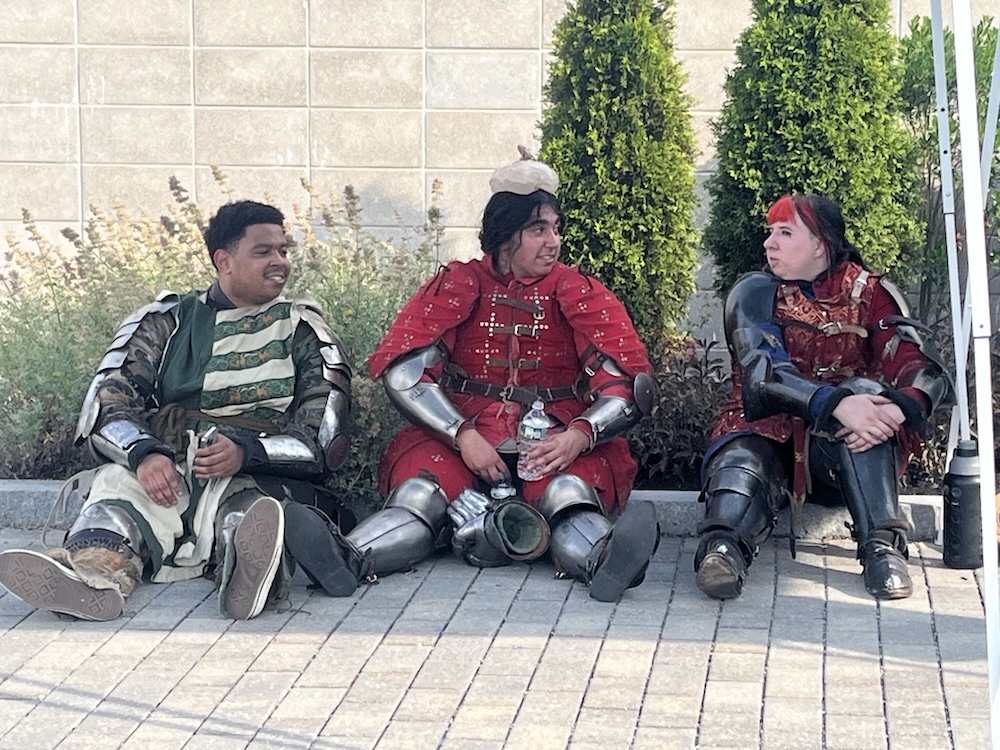
Every now and then, they encounter unchivalrous shit talking knuckleheads.
“My favorite category of people who talk about joining the sport are those guys who say, I’m afraid I’ll go into a blackout rage and kill somebody,” Molokov said. “All I say is, Right, let’s get you into that armor first of all. We’ll talk after your first round.”
The North Horde had a triumphant 2025 season. The fighters raised hell at a ren fair at Ralph’s Diner in Worcester, massacred the Manchester Brew Fest, knocked in heads at Notch Brewery in Salem, led an assault at the Armory in Somerville, ransacked the Knight Carnival in Brighton, and slaughtered at the Allston Street Fair.
But with the winter coming, the North Horde is being forced into hibernation.
“Indoor venues are hard to come by,” Helenski said.
“Most of our bouts are held outdoors, which is impossible in the ice and snow.”