
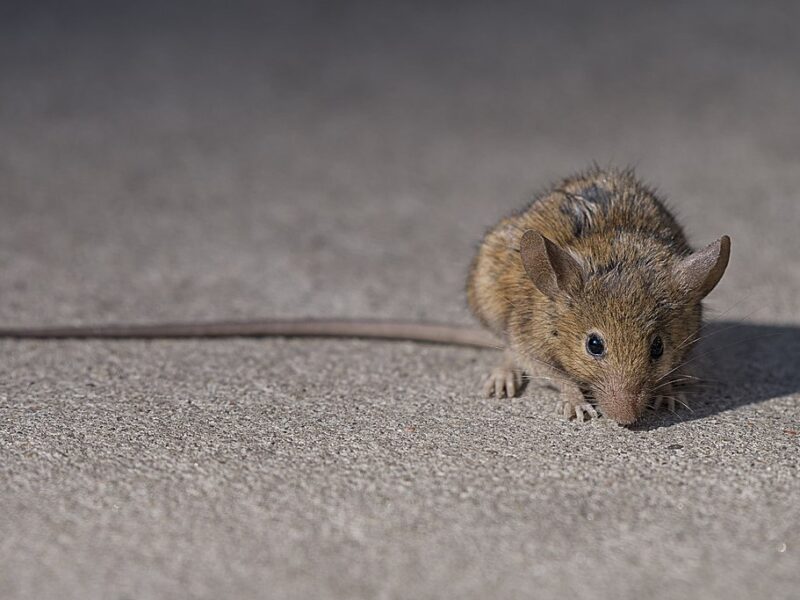
Photo by G. Scott Segler
“Those rats are eating their young right now. It’s survival of the fittest.”
Much like a suburbanite demanding buffet nachos and a haircut, rodents across the region are getting increasingly aggressive amid restaurant closures and self-quarantine.
Complaints about rodent activity to the City of Boston’s 311 system jumped 31% in the first five months of 2020, compared to the same period in 2019. Complaints from East Boston spiked by 114%, followed by a 61% increase in the Back Bay, while Allston/Brighton saw a 50% increase.
Cambridge has seen a 57% spike in rodent complaints compared to the first five months of the year in 2019. This year’s complaints have already surpassed the number of complaints for the entirety of 2019.
Somerville has likely seen similar spikes, but the city has not updated its 311 service call data set since last November.
Residents of the metro Boston area are well aware of the cities’ chronic war against rodents. This has intensified since restaurants began closing, temporarily and in many cases permanently, during the coronavirus pandemic.
Fewer restaurants operating means far less trash in the alleys behind establishments, which in turn means rodents are having to venture farther out to find food sources, be they residential trash, three-story homes, or cars that have been left parked on the street since March.
Last week, the Centers for Disease Control issued a warning about rodents becoming more aggressive as food becomes less available due to restaurant closures.
“Community-wide closures have led to a decrease in food available to rodents, especially in dense commercial areas,” according to the CDC. “Some jurisdictions have reported an increase in rodent activity as rodents search for new sources of food.”
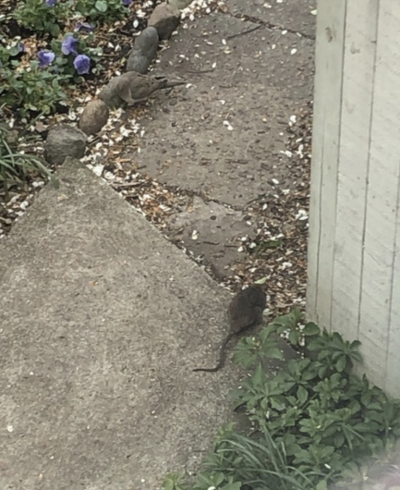
Both Boston and Cambridge’s 311 service data include short descriptions of resident complaints.
On May 26, a Cambridge resident reported a large rat that was apparently loitering on a sidewalk at four in the afternoon, showing no fear from approaching humans.
“Lots of rats in Plymouth Street these days,” wrote another resident. “Saw three in the last two days running across [the] street or in gutter.”
Leo Boucher, assistant commissioner of environmental service for Boston, said that the uptick in rodent activity is not surprising considering the depletion of available restaurant trash.
“The rodents are actually looking for food that is not there, so there are a lot more sightings,” he said, noting the mild winter had already set the stage for increased rodent activity. “They need food and water to survive. It doesn’t have to be filet mignon, it doesn’t have to Evian.”
Boucher reported that he has seen an increase in aggressiveness among rodents, as well as cannibalism.
“Those rats are eating their young right now. It’s survival of the fittest,” he said.
Boucher did not speculate on whether or not these conditions would breed a more vicious rodent, but he did say that Boston’s Inspectional Services Department is working with the CDC and the agency has also consulted with Bobby Corrigan, a New York City-based expert on rodents.
“We’ll be able to get it under control,” Boucher said. “We’ll change our way of doing business if need be. Unfortunately, the entire world is doing that. I think reality right now dictates that the whole world is going to be doing things differently for the foreseeable future.”